
Devoted Together: Living as a Spirit-Filled Community
Day 1: Remembering Who You Are
Reading: Ephesians 1:3-6 — Paul reminds believers that God chose them before creation, adopting them into his family through Jesus Christ, lavishing upon them grace and love.
Devotional: It is remarkably easy to forget your identity. You move through crowded streets, sit in busy offices, scroll through endless noise, and quietly begin to believe you are ordinary, unimportant, or overlooked. But Scripture insists otherwise. You have been chosen, adopted, and deeply loved by the Father of all creation. As the sermon reminded us, when we pray “our Father,” we are not only recalling who God is — we are recalling who we are to one another: brothers and sisters sharing one divine bloodline. Today, resist the temptation to treat the people around you as background extras. Look at them differently. Every person you encounter today carries the image of God. Let that truth slow you down, soften your impatience, and open your heart.
Reflection: In what areas of your life have you forgotten your identity as God’s beloved child? How might remembering that identity change the way you treat others today?
Practical Application: Before you speak to anyone today, pause for a single moment and silently acknowledge that they are a sacred person, deeply loved by God. Practice this throughout the day and notice how it changes your interactions.
Day 2: The Holy Spirit Changes Everything
Reading: Acts 2:1-4, 42-47 — Luke describes the Spirit descending at Pentecost and the remarkable community that emerged in its wake, marked by devotion, generosity, joy, and daily growth.
Devotional: The early church did not manufacture their devotion through discipline alone. They did not gather a committee, produce a strategy document, and resolve to become more generous. The Holy Spirit descended, and everything changed from the inside out. Cold hearts became burning hearts. Isolated individuals became a devoted community. What is striking is that they were devoted to all four pillars — teaching, fellowship, meals, and prayer — not just the ones they found comfortable or convenient. True devotion is not selective. It is the fruit of a Spirit-filled life. You cannot grit your teeth into genuine love. You must ask the Spirit to do what only he can do.
Reflection: Which of the four pillars — teaching, fellowship, shared meals, or prayer — do you find most difficult to remain devoted to? What might that reveal about where you need the Spirit’s work most?
Practical Application: Spend five minutes in honest prayer today, naming the specific area of church life where you feel dry or dutiful rather than devoted. Ask the Holy Spirit to fill you afresh and to transform that duty into genuine desire.
Day 3: A Praying People
Reading: Acts 1:14 — The early believers are described as joining constantly and united in prayer, together as one body.
Devotional: The early church prayed everywhere. They prayed in temples and on beaches, at midnight and at midday, in prisons and in palaces. Prayer was not a scheduled activity they attended — it was the atmosphere they breathed. It reflected a profound and practical truth: they were utterly dependent on God. They knew they could not build the kingdom of God in their own strength, so they did not try. For many of us, prayer is the first thing we reduce when life gets busy and the last thing we return to when we feel desperate. But the sermon challenges us to ask honestly: are there places we go or situations we face where we have quietly stopped expecting God to show up? The disciples had no such places. Neither should we.
Reflection: Where in your life have you stopped praying, perhaps because you have grown discouraged or self-reliant? What would it look like to return to dependence on God in that area?
Practical Application: Identify one person in your church community today and send them a message — not to catch up socially, but specifically to ask how you can pray for them. Then actually pray for them, by name, before the day ends.
Day 4: The Sacredness of Fellowship
Reading: Romans 15:1-7 — Paul urges believers to bear with one another’s weaknesses rather than pleasing themselves, to accept one another just as Christ accepted them, so that God might be glorified.
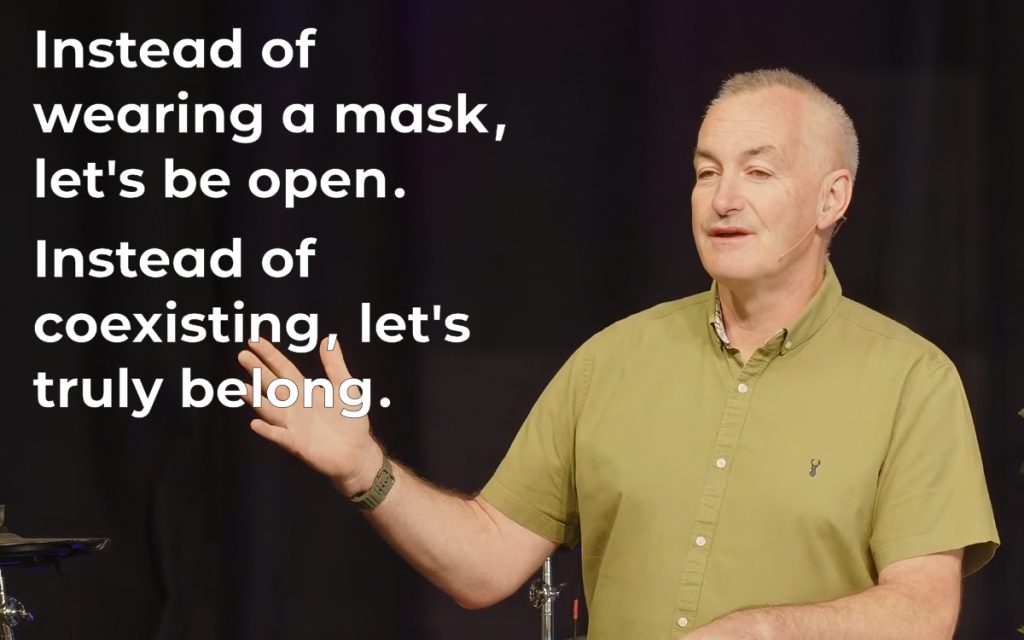
Devotional: True fellowship is terrifying. Not the surface-level version where we exchange pleasantries over coffee, but the kind where we lay down our masks, confess our struggles, and allow others to see us as we actually are. Dietrich Bonhoeffer wrote that it is grace, nothing but grace, that we are allowed to live in community with Christian brothers and sisters. He was right. Community is a gift we did not earn and cannot sustain in our own strength. The Holy Spirit must do the inner surgery — replacing our fear with love, our defensiveness with compassion, our performance with sincerity. The sermon painted a vivid picture: one Amy offering her head as a step so her friend could climb higher. That is what devoted fellowship looks like. Costly, humble, and quietly extraordinary.
Reflection: Where are you currently performing in your church community rather than participating? What mask are you wearing that the Holy Spirit is inviting you to lay down?
Practical Application: This week, reach out to one person in your church whom you do not know well. Invite them to share a meal — whether in your home, a cafe, or anywhere else. Make the first move toward real friendship.
Day 5: A Community That Draws Others In
Reading: John 13:34-35 — Jesus commands his followers to love one another as he has loved them, declaring that this love will be the very thing that identifies them to the watching world as his disciples.
Devotional: The early church did not grow primarily through clever programs or polished presentations. They grew because they loved one another in a way the surrounding world had never seen. People watched and were drawn in. The sermon carried a clear and compelling dream: a church so genuinely devoted, so authentically loving, so openly generous, that people outside it are naturally drawn toward it. Not because the building is impressive or the music is flawless, but because the love is real. That kind of love does not come from human effort. It comes from being continuously filled with the Spirit, as Paul urges in Ephesians 5. The dream is not beyond reach. It begins with you, today, asking the Spirit to fill you and change you from the inside out.
Reflection: If someone observed your church community for one week — not your services, but your everyday relationships — what would they conclude about the God you worship? What would you want them to see that they are not yet seeing?
Practical Application: Write down one specific, concrete way you will participate more fully in your church community this week — not out of duty, but as an act of devotion. Share it with one other person who can encourage you and hold you gently accountable.
0 Comments