
In the scorching heat of the day, three strangers appeared on the horizon. They could have been anyone—travelers, traders, or even enemies. In a world of warring tribes and territorial conflicts, suspicion would have been the natural response. Yet what happened next reveals one of Scripture’s most profound lessons about hospitality, transformation, and the unexpected blessings that flow from radical generosity.
When Strangers Approach
Genesis 18 opens with a deceptively simple scene: Abraham sitting at the entrance to his tent when three men appear nearby. The text tells us “the Lord appeared to Abraham,” but Abraham didn’t know that yet. All he saw were three foreigners, possibly from nations he had recently been at war with. They could have been spies, scouts for an enemy army, or men seeking revenge.
This wasn’t paranoia. Abraham had just returned from battle with the kings of Shinar, Ellasar, Elam, and Goyim. The threat was real. The danger was palpable. These strangers had every reason to be viewed with suspicion.
Yet Abraham’s response defies all reasonable caution. He doesn’t wait at his tent entrance, watching warily. He doesn’t send a servant to investigate. Instead, the Scripture says he “hurried” and “ran” to meet them. Some translations emphasize that he literally ran from his tent to greet these potential enemies.
Hospitality That Goes Beyond Duty
What Abraham offers next is nothing short of extraordinary. This wasn’t simply fulfilling a cultural obligation to provide basic hospitality. This was extravagant, sacrificial, and completely over-the-top generosity.
Consider the context: it was the hottest part of the day, likely approaching 40 degrees Celsius. On such a day, most of us might offer cold refreshments, perhaps a simple sandwich or salad. Abraham did the opposite. He asked Sarah to bake fresh bread—in that oppressive heat, with an oven that would make the tent even hotter. He ran to his herd and selected not just any animal, but a “choice tender calf,” the absolute best he had. He prepared a feast fit for royalty: fresh bread, roasted meat, curds, and milk.
This wasn’t convenience food. This was a multi-hour preparation requiring significant sacrifice from Abraham, Sarah, and their servants. And remember—these were travelers passing through. Abraham would likely never see them again. There was no expectation of reciprocation, no hope that they would invite him over for dinner next week. This was pure, one-directional generosity.
The Why Behind the Welcome
What drives someone to show such radical hospitality to potential enemies? Cultural norms certainly played a role, but Abraham went far beyond what was merely expected. Perhaps he remembered his calling—that God had promised not just to bless him, but to make him a blessing to all nations. These foreigners represented those very nations.
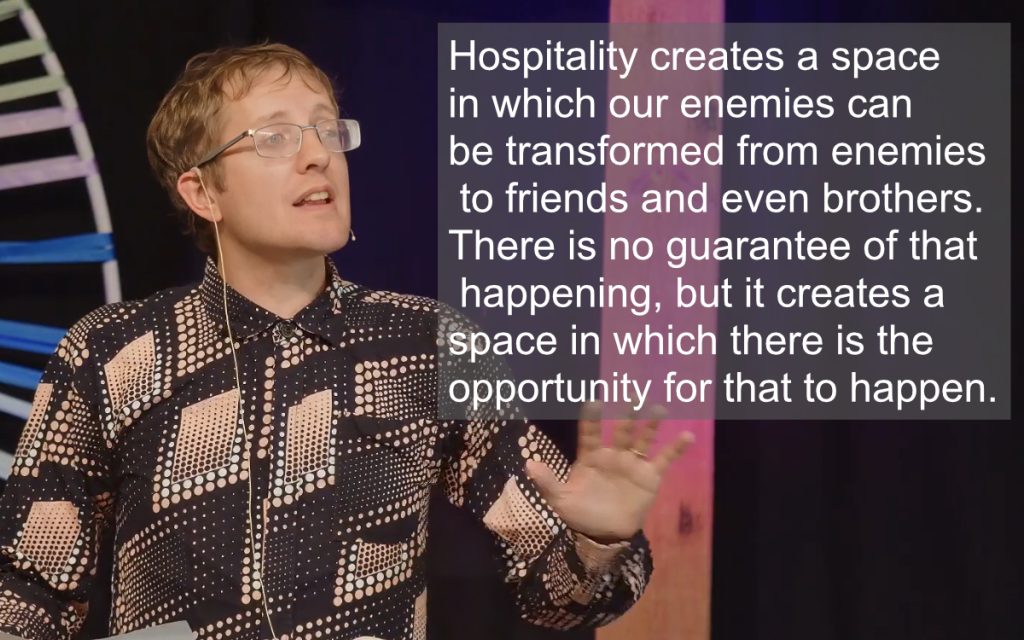
More profoundly, Abraham seemed to understand something transformative about hospitality: it creates space where enemies can become friends, where strangers can become brothers. There are no guarantees, but hospitality opens possibilities that suspicion and self-protection can never create.
Unexpected Blessings
Abraham couldn’t have anticipated what happened next. These weren’t ordinary travelers—they were divine messengers. Through his hospitality, Abraham received blessings he couldn’t have imagined: the promise that within a year, Sarah would bear a son. God’s long-awaited promise was about to become reality.
But the blessings went even further. God revealed his plans to Abraham, treating him as a trusted friend. God shared that he intended to judge Sodom and Gomorrah, and gave Abraham the opportunity to intercede for the righteous. Through this conversation, Abraham’s nephew Lot and his family were ultimately saved.
Hospitality unlocked unexpected divine favor.
The Contrast: Sodom’s Failure
The following chapters show the opposite approach. When the same messengers arrived in Sodom, Lot invited them in, but the other men of the city responded with threats of violence. Rather than welcoming strangers, they sought to terrorize them—perhaps hoping to deter other foreigners from coming. They saw strangers as threats to be eliminated rather than guests to be blessed.
The result? Total destruction. Sodom and Gomorrah became bywords for inhospitality, cities so opposed to welcoming the stranger that they brought judgment upon themselves.
The Gospel Pattern
This ancient story isn’t just historical narrative—it’s a pattern that echoes throughout Scripture and culminates in the gospel itself. God showed us the ultimate hospitality when we were his enemies. Romans 5 reminds us that “while we were still his enemies, God reconciled us to himself.” We didn’t make ourselves acceptable first. God took the initiative, paid the enormous cost, and invited us in.
Jesus reinforced this pattern when he taught his disciples not to invite those who could repay them, but rather “invite the poor, the crippled, the lame, the blind” (Luke 14:13). True hospitality expects nothing in return. It gives extravagantly to those who cannot reciprocate.
Living It Out Today
The challenge for us is clear: Who are we being called to show hospitality to? Who do we see as a threat or potential enemy that God actually wants us to welcome with extravagant generosity?
This isn’t about being naive or foolish. It’s about being intentional. Abraham was proactive—he ran to meet the strangers, not risking that they might pass by without receiving his welcome. He didn’t wait for them to ask for help.
True hospitality is also costly. It offers the best of what we have, not just leftovers or whatever is convenient. It requires sacrifice, inconvenience, and risk.
But the promise remains: when we extend God’s hospitality to others, we not only create space for transformation—turning enemies into friends—but we also position ourselves to receive unexpected blessings that we could never have imagined.
In a world increasingly marked by suspicion, division, and self-protection, the call to radical hospitality has never been more counter-cultural or more needed. The question is simply this: will we run toward the stranger, or wait safely in our tents?
0 Comments