
Here are some simple, family‑friendly discussion starters based on the sermon and the story of the healing at the pool of Bethesda (John 5) and the work of Hope Into Action. You can pick a few for one mealtime rather than doing all at once.
1. Seeing Need & Not Walking Past
- In the story, Jesus goes to the pool where lots of people are suffering.
• Where are the “pools” in our town – places where people in need might be?
• Have you ever seen someone who looked like they needed help? What did you do, or what could you have done? - The preacher said we can feel overwhelmed and end up doing nothing.
• When have you felt like, “There’s too much to fix, I can’t do anything”?
• What’s one small thing we could do as a family to help one person or group?
2. “Do You Want to Get Well?”
- Jesus asks the man, “Do you want to get well?”
• Why do you think Jesus asked that question instead of just healing him straight away?
• Can change or getting better sometimes feel scary? When? - Think of a habit or situation in your own life that’s not great.
• If Jesus asked you, “Do you want to get well?” in that area, what would you say?
• What might you have to leave behind if you really wanted to change?
3. Laying Down & Taking Up
- The sermon talked about laying things down and taking things up.
• What is something unhealthy or unhelpful that people might need to “lay down” (e.g. bad habits, anger, shame, unhelpful friendships)?
• What is something good that Jesus might be inviting us to “take up” (e.g. courage, hope, new routines, trust)? - As a family, what is one thing we could “lay down” this week (a habit, a way we speak, or how we spend time)?
• And what is one thing we could “take up” instead?
4. Relational Poverty – “I Have No One to Help Me”
- The man at the pool says, “I have no one to help me.”
• How do you think it would feel to say, “I have no one to help me”?
• Have you ever felt a bit like that? What helped you? - The sermon talked about “relational poverty” – not having friends or family to turn to.
• Besides money or a house, why are friendships and relationships so important?
• Who in your life might be lonely and could use a friend?
5. Homelessness & Hope Into Action
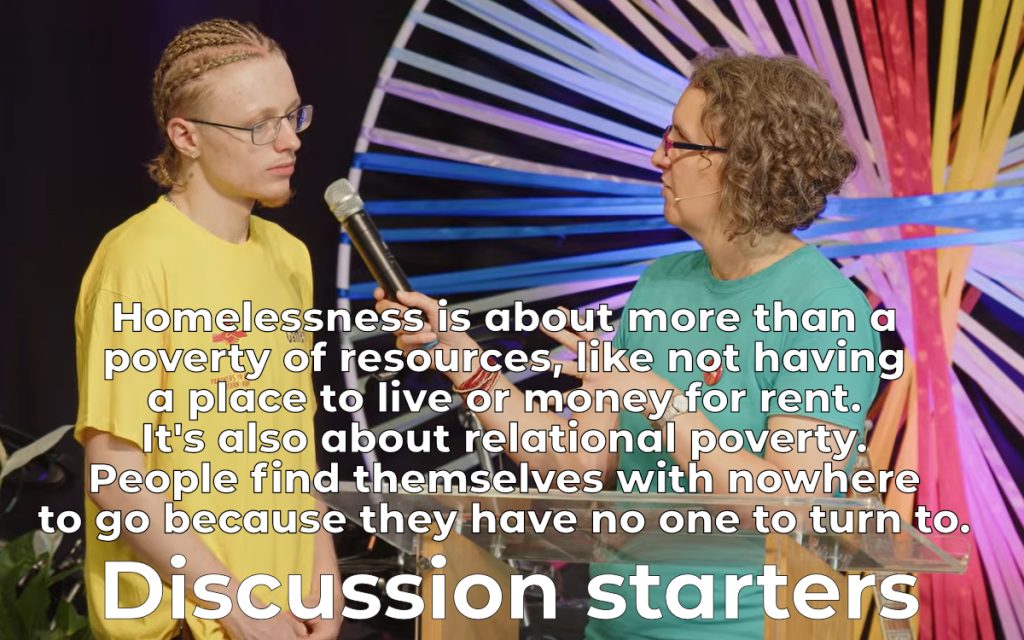
- The preacher said homelessness is not just about not having a house, but also about not having people.
• When you think of someone who is homeless, what thoughts or feelings come to mind?
• Have you ever believed things about homeless people that might not be fair? - Hope Into Action links churches, houses, and tenants.
• What part of that work stood out to you – the houses, the volunteers, the prayer, the support workers? Why?
• If we were going to support something like Hope Into Action, what could we realistically do (prayer, giving, volunteering in age‑appropriate ways, raising awareness)?
6. Courage to Trust Again
- The preacher shared that tenants often have been badly let down and it’s hard to trust again.
• Why is it hard to trust people after you’ve been hurt?
• What helps rebuild trust over time? - Has there been a time when you had to trust someone again after being disappointed?
• What made you decide to give them (or someone new) another chance?
7. Jesus’ Kind of Help
- Jesus doesn’t give the man money or advice; he offers healing and a new start.
• What’s the difference between a “quick fix” kind of help and the deeper help Jesus gives?
• Can you think of a time when someone helped you in a way that really made a long‑term difference? - The sermon said Jesus shows compassion.
• What does compassion look like in daily life at school, work, or home?
• How can we show compassion to each other in this family?
8. Our Church’s Role
- The sermon celebrated that the church partners with Hope Into Action, prays, and provides volunteers.
• Why do you think it matters that the church is involved in ending homelessness, not just the government or charities?
• When you think about our church, what do you hope we are known for in our community? - If you could design a new project for our church to help people in need, what would it be and why?
9. Stories of Change
- The preacher shared stories of tenants moving into their own places, feeling safe, or learning new coping skills.
• Which story did you find most encouraging or surprising? Why?
• What do these stories show you about what God can do over time? - Think of a change in your own life (big or small) that you’re thankful for.
• Where do you see God’s help in that change?
10. Praying & Acting Together
- The sermon emphasised prayer as the most important support.
• Why might prayer be even more important than money?
• How do you feel when you pray for people you don’t personally know? - As a family, what is one concrete thing we will:
• Pray for this week (a ministry, a person, or a need like homelessness)?
• Do this week (a small action that shows Jesus’ love to someone)?
You could finish the meal by letting each person answer in one sentence:
- “Today, I think Jesus is inviting me to lay down __.”
- “And I think he’s inviting me to take up __.”
Then pray a short prayer together about those things.
DISCUSSION QUESTIONS
Jesus healed only one person among the crowd at the Pool of Bethesda. How does this challenge our tendency to feel overwhelmed by need and do nothing when we cannot help everyone?
The man at the pool had been disabled for 38 years, yet Jesus asked, ‘Do you want to get well?’ What might prevent someone from wanting change even when they are suffering, and how does this apply to situations of homelessness or addiction?
The disabled man said, ‘I have no one to help me.’ How does relational poverty contribute to cycles of homelessness, and what is the church’s role in addressing this kind of poverty?
What does it mean to ‘lay down’ old patterns and ‘take up’ new life, both in the context of the healing at Bethesda and in the journey out of homelessness?
The healed man had to exercise faith to stand on legs that had not worked for 38 years. What kinds of faith and courage are required for someone to accept help and step into a new life after trauma or homelessness?
How can we balance wisdom and compassion when deciding whether to give money to people on the streets, and what alternative ways can we show Christ’s love to those experiencing homelessness?
Caroline mentions that tenants bring not only pain but also stories of survival and strengths. How can we learn to see the gifts and resilience in people experiencing hardship rather than only their needs?
The sermon emphasizes that healing and recovery are not quick or straightforward. How does this reality challenge our expectations for ministry outcomes and our patience in walking alongside people in need?
Hope Into Action operates through partnerships between professional support and church relationships. What unique contribution can the church make that professional services cannot, and vice versa?
Jesus did not avoid the Pool of Bethesda despite the overwhelming need there. What areas of need in our communities might we be avoiding, and what would it look like to intentionally go there as Jesus did?
0 Comments