
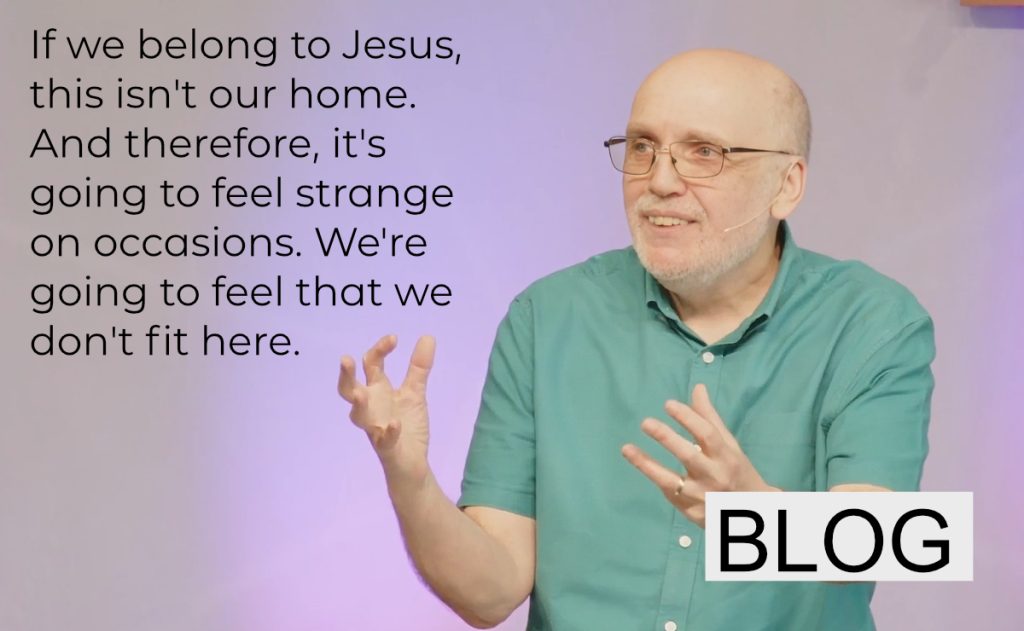
Have you ever felt like you don’t quite belong? Like you’re living in a place that doesn’t feel like home, even when you’re surrounded by familiar sights and sounds? This feeling—this spiritual homesickness—is more than just nostalgia. It’s a profound reality for every follower of Christ.
The Ache of Being Away from Home
Homesickness is a universal human experience. Whether it’s leaving for college, moving to a new city, or simply feeling out of place at a social gathering, we’ve all experienced that longing for the familiar. The Israelites captured this feeling perfectly in Psalm 137: “By the rivers of Babylon we sat and wept when we remembered Zion.”
But there’s a deeper homesickness that touches the soul of every believer—the recognition that this world is not our final destination. We are, in the truest sense, exiles on earth.
Three Types of Exile
Scripture reveals three distinct reasons why God’s people find themselves in exile:
Disobedience is the most obvious. Adam and Eve were exiled from paradise because of rebellion. The Israelites found themselves in Babylon because they refused to trust God. When we turn away from God’s path, we experience separation—from His presence, from His peace, and from the life we were meant to live.
The Desert Experience represents a different kind of exile. Sometimes God allows or even sends us into wilderness seasons—not as punishment, but as preparation. These isolated, unfamiliar places become crucibles of transformation. In the desert, we’re tested, molded, and refined. We emerge stronger, more secure, and more effective in God’s kingdom.
The Decision to Follow Jesus creates a third type of exile. The moment we commit our lives to Christ, we become citizens of another kingdom. We no longer belong to this world’s system. As the old spiritual reminds us, we’re “just passing through.” This isn’t pessimism—it’s perspective.
The Radical Promise: Peace in Exile
Here’s the remarkable truth: peace is possible in exile. Not just any peace, but shalom—the Hebrew concept of everything being as it should be, everything working in perfect harmony.
Jesus spoke these words to His disciples just before His death: “Peace I leave with you; my peace I give you. I do not give to you as the world gives. Do not let your hearts be troubled and do not be afraid” (John 14:27).
Consider the context. Jesus was preparing His followers for a world mission where they would face opposition, persecution, and even martyrdom. Yet in the midst of this sobering reality, He offered them peace. Not the absence of trouble, but the presence of God in the midst of it.
Four Pathways to Peace in Exile
1. Peace is Found in Not Belonging
The early Christians were described as “exiles scattered throughout the provinces” (1 Peter 1:1). They were spiritual oddballs—people who spoke differently, lived differently, spent money differently, and worshipped differently than everyone around them.
And that was okay.
We’re not meant to fit perfectly into this world’s mold. We’re spiritual ETs, and occasionally we need to “phone home” through prayer. This isn’t about creating a ghetto mentality or withdrawing from society. It’s about recognizing that our values, priorities, and ultimate allegiance belong to another kingdom.
2. Peace is Found in Not Settling
Abraham’s father, Terah, began the journey toward the promised land but settled halfway there. Abraham, however, kept going. He refused to make a permanent home in a temporary place.
Hebrews 11:9-10 tells us: “By faith he made his home in the promised land like a stranger in a foreign country; he lived in tents… For he was looking forward to the city with foundations, whose architect and builder is God.”
Abraham lived in tents—temporary dwellings—because he was looking toward something better. This is the pilgrim’s posture: always moving, always growing, always being transformed “from one degree of glory to another.”
One of the dangers facing the modern church is the temptation to settle—to make peace with the world’s values, to seek comfort over calling, to prioritize relevance over righteousness. But genuine disciples refuse to stand still spiritually. They’re on a journey toward holiness, toward becoming more like Jesus.
3. Peace is Found in Not Grasping
In a culture obsessed with accumulation, this principle feels countercultural. We’re bombarded with messages suggesting that happiness lies in the next purchase, the bigger house, the fuller bank account.
But as Christians, we’re already rich. We possess treasures that cannot be stolen or diminished. This liberates us to be radically generous—with our time, our talents, and yes, our money.
Consider Daniel, the great prophet in Babylon. He didn’t hoard his gifts; he offered them generously for the benefit of the foreign power that held him captive. In Jeremiah 29, the exiles were instructed to “seek the peace and prosperity of the city” where they were held captive—to pray for and work toward the flourishing of even their hostile environment.
This is the upside-down economics of the kingdom: we find peace not in grasping but in giving.
4. Peace is Found in Not Worrying
Jesus’ promise of peace wasn’t theoretical. It was practical, powerful, and proven in the lives of His followers.
Think of Paul and Silas in prison (Acts 16), facing likely execution, yet singing songs of praise at midnight. What explains this extraordinary response? They had experienced the peace of Christ—a peace that doesn’t depend on external circumstances but on an internal presence.
This peace is refreshing—it does exactly what it promises, quenching our thirsty souls.
This peace is robust—it survives the harshest conditions because it’s not dependent on our circumstances being favorable.
This peace is relational—we experience it when we know Jesus, when He’s not just a concept but a presence in our hearts.
Isaiah 26:3 captures this beautifully: “You will keep in perfect peace those whose minds are steadfast, because they trust in you.” When we focus on Jesus, delight in Him, and treasure Him above all else, His peace becomes our reality.
The Journey Home
Living as exiles means life won’t be perfectly sorted out in this world. There will always be difficulties and challenges. But even in the midst of these realities, we can experience the deep, supernatural peace that Jesus offers.
And here’s the ultimate hope: our homesickness is temporary. One day, it will turn into our homecoming. The peace we experience now is just a foretaste of the perfect peace we’ll know when we finally arrive in our true home.
Until then, we journey on—not settling, not grasping, not worrying—but resting in the peace that surpasses understanding, the peace that only Jesus can give.
0 Comments