
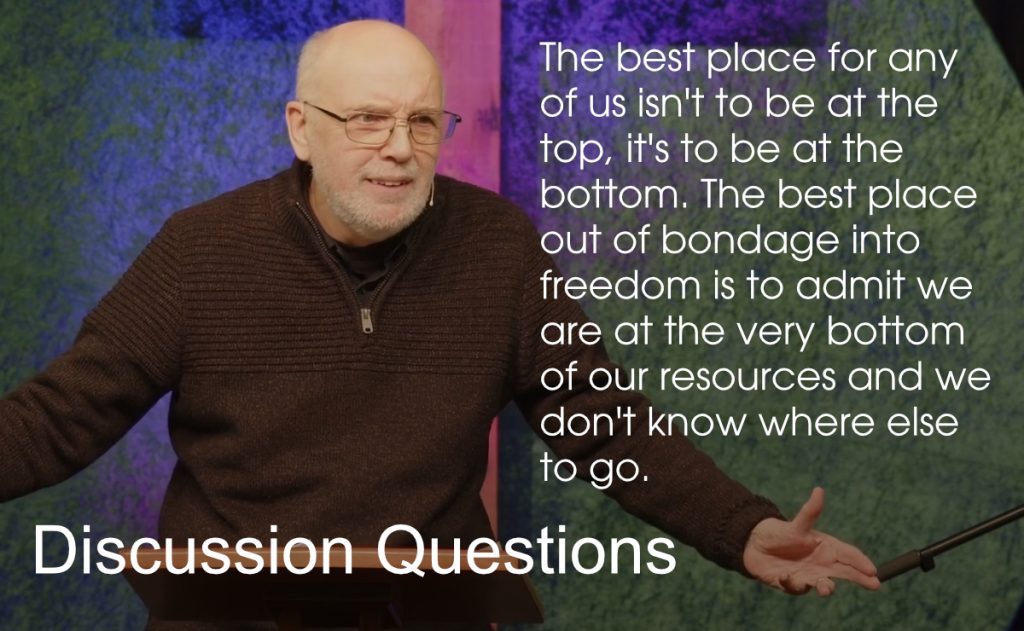
The pastor suggests that everyone in the room is enslaved by something. What areas of bondage might Christians struggle to recognize in their own lives, and why is honesty about these struggles essential to experiencing freedom?
Moses told the Israelites to stop crying out and move forward. How do we discern when it’s time to stop praying about something and start acting in obedience to what God has already revealed?
The sermon emphasizes that the strongest position is when we are weakest and the highest position is when we are lowest. How does this counter-cultural perspective challenge modern ideas of success and self-sufficiency?
Fiona Castle experienced spiritual darkness despite considering herself a good person with occasional church attendance. What does her story reveal about the difference between religious activity and genuine relationship with God?
The pastor warns against DIY freedom and trying to fix ourselves. In what ways do Christians fall into the trap of believing their good works, prayer life, or church attendance earns them acceptance with God?
The Israelites had to trust that God would both protect them and deliver them while doing nothing but waiting. What does biblical waiting look like, and how is it different from passive inactivity?
The sermon asks whether we have downgraded God into a manageable deity without room for the supernatural. How might rational skepticism or intellectual faith rob us of experiencing God’s miraculous power?
Xavier’s story shows God orchestrating circumstances through signs, inner promptings, and Billy Graham’s message. How have you seen God work behind the scenes in your own journey toward freedom?
The pastor states that miracles are glimpses of ultimate reality breaking into our fallen world. How should this understanding of miracles shape our expectations for both this life and the life to come?
If freedom truly comes only through trusting God rather than our own efforts, what practical steps can we take to surrender control and place our complete confidence in His deliverance?
QUESTIONS FOR FAMILY DISCUSSION
Here are some family-friendly discussion starters based on the sermon. You can pick just a few for one meal, rather than trying to do all of them at once.
1. Bondage / Slavery Today
- The preacher said, “I reckon everybody in this room is enslaved by something.”
- What do you think he meant by that?
- What are some modern “slaveries” (e.g., worry, screens, people‑pleasing, success, money, anger)?
- Without sharing anything too personal, is there anything you feel “controls” you more than you’d like?
- How can we tell the difference between a good habit and something that’s become a kind of “bondage”?
2. God Saves, Not Us
- The Israelites did nothing to part the Red Sea—God did it all.
- Why do you think God wanted them (and us) to know that we “do nothing” to save ourselves?
- The sermon quoted, “Nothing in my hand I bring, only to the cross I cling.”
- What does that mean in your own words?
- Are there ways we sometimes try to “earn” God’s love (by being good, reading the Bible, going to church, etc.)?
- How can we turn those things into a response to His love instead of a way to earn it?
3. Trusting vs. Fixing
- The “except” in the sermon was one word: trust.
- What’s the difference between “fixing” a problem ourselves and trusting God with it?
- Moses told the people, “The Lord will fight for you; you need only to be still.”
- When is it right to “be still and wait”?
- When is it right to “move on” like God later told Moses?
- Are you more of a “fix‑it” person or a “wait and see” person?
- How can both types learn to trust God more?
4. Fear, Panic, and Faith
- Imagine being an Israelite with the sea in front of you and the Egyptian army behind you.
- How do you think you would have felt?
- What might you have said to Moses?
- Can you think of a time you felt “stuck” like that—with no good options?
- How did you react?
- Where was God in that situation?
- If someone in our family feels panicked or trapped, what are some practical ways we can help them trust God?
5. Miracles and God’s Power
- The sermon said a “non‑miracle‑making God is not worth following.”
- Do you believe God still does miracles today? Why or why not?
- Have you ever experienced, or heard of, something that felt like God “stepping in” in a surprising way?
- How might our faith change if we really believed God is powerful enough to part seas, change hearts, and break addictions?
6. Stories of Freedom
- The preacher shared stories about Fiona and Javier being set free.
- What stood out to you in those stories?
- Why do you think God so often uses other people (like the lady who called Fiona, or Billy Graham for Javier) in His rescue plans?
- Is there someone you know who might need to hear about the freedom Jesus offers?
- What’s one gentle way you could encourage them?
7. Our “Egypt” and Our “Promised Land”
- The preacher asked, “What is your Egypt? What is your slavery?”
- If you’re comfortable, what might “Egypt” represent in your life right now?
- What does “freedom in Christ” look like in everyday life—at school, at work, at home?
- If you pictured your own “promised land” (a life really free in Jesus), what would be different from how things are now?
8. Waiting and Moving
- The sermon highlighted two commands:
- “Be still” and
- “Tell the Israelites to move on.”
- As a family, where might God be saying “wait,” and where might He be saying “move”?
- Are there any areas where we, as a family, are trying to “DIY” (do it ourselves) instead of asking God to act?
- What is one thing we can pray for together where we consciously stop “fixing” and start trusting?
9. Lent, Honesty, and Reflection
- Lent is a time of “reflection, simplicity, and honesty.”
- What is one honest thing about yourself you’d like to bring to God this season?
- Is there something you might want to “give up” or “take up” for a while—not to earn points with God, but to help you focus more on Him?
- How can we as a family remind each other that “it is by grace you have been saved,” not by our performance?
10. Bringing It Home
- What did you personally find most challenging in this sermon?
- What did you find most encouraging?
- If you could ask Moses or one of the Israelites a question about the Red Sea moment, what would you ask?
- What is one practical step of trust you want to take this week, based on what we’ve talked about?
You can end your discussion by inviting each person to share one short prayer request related to “bondage” and “freedom,” and then pray a brief prayer together, asking God—the one who parts seas—to lead your family forward.
0 Comments