
The ancient confrontation between Moses and Pharaoh wasn’t merely a political standoff between a liberator and a tyrant. It was something far more profound—a spiritual showdown that exposed the emptiness of false gods and revealed the supremacy of the one true God. And perhaps most surprisingly, this ancient battle has everything to do with the struggles we face today.
When Gods Collide
Picture the scene: Moses and Aaron, both well into their eighties, standing before the most powerful ruler on earth. They had God on their side, yet when Aaron’s staff transformed into a serpent, Pharaoh’s magicians replicated the miracle. When the Nile turned to blood, the Egyptian sorcerers did the same. You can almost feel Moses and Aaron’s hearts sink. Is our God strong enough?
But here’s what makes this story fascinating: the ten plagues weren’t random acts of divine fury. Each one was a calculated strike against specific Egyptian deities. When the Nile turned to blood, it humiliated Khnum, the Nile god, and Hapi, the Nile spirit. The plague of frogs mocked Heqet, the frog goddess. Boils shamed Imhotep, the god of healing. Hail defeated Nut, the sky goddess.
God was systematically dismantling Egyptian religious confidence, exposing what one commentator called “divine impotence precisely in the domains where those gods claimed authority.” The message was clear: your gods cannot protect you, cannot heal you, cannot save you.
The final two plagues carried the greatest theological weight. Darkness covered the land for three days—a direct assault on Amun-Re, Egypt’s principal sun deity. And the death of the firstborn struck at Pharaoh himself, considered the son of Amun-Re, and his heir, Egypt’s future god.
The Idols We Don’t See
This is where the ancient story becomes uncomfortably modern. Because while we don’t bow down to frog goddesses or sun gods, we absolutely have our idols. They’re just harder to recognize because they don’t sit on altars or wear animal heads.
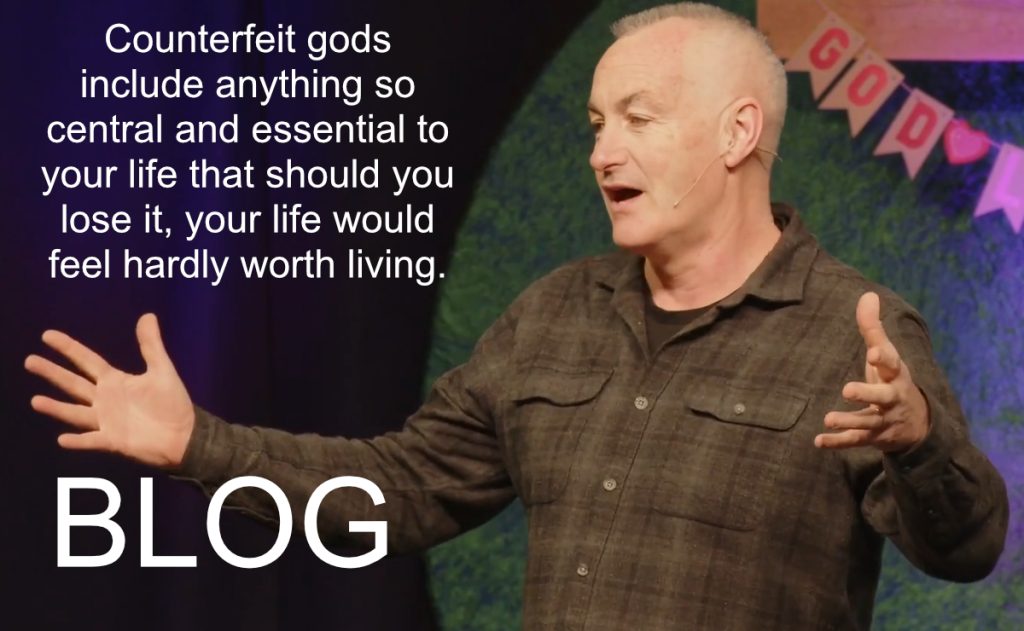
Timothy Keller offers a penetrating definition: “Counterfeit gods include anything so central and essential to your life that should you lose it, your life would feel hardly worth living.”
Let that sink in. What would make your life feel hardly worth living if you lost it? That’s probably your idol.
Charles Spurgeon, the great Baptist preacher, put it even more starkly: “If God sees us making idols of anything, he will either break our idols or break us.”
The reformer John Calvin observed that “every one of us, even from his mother’s womb, is an expert in inventing idols.” We’re remarkably creative when it comes to fashioning false gods. We might not carve them from stone, but we craft them from our careers, relationships, bank accounts, and ambitions.
Three Ways We Serve Our Idols
The Bible uses three powerful metaphors to describe how we relate to the idols of our hearts: we love them, we trust them, and we obey them.
In Ezekiel 20, God laments: “Their hearts were given to their idols.” When our hearts are captive to something other than God, that’s where our energy flows. That’s what gets our best attention, our deepest passion, our greatest devotion.
Jeremiah captures the tragedy of misplaced trust: “To an image carved from a piece of wood they say, ‘You are my father.’ To an idol chiseled from a block of stone they say, ‘You are my mother.’ They turn their backs on me, but in times of trouble they cry out to me, ‘Come and save us!'”
How often do we trust in our idols—our careers, our relationships, our financial security—until they fail us? Then we cry out to God as a last resort.
And in Judges, God says something chilling: “Yet you have abandoned me and served other gods. So I will not rescue you anymore.” Obedience to idols comes at the cost of God’s deliverance.
Good Things Become god Things
Here’s the tricky part: many of our idols start as good things. Family, children, work, health, romantic relationships, financial security—these aren’t inherently bad. In fact, they’re gifts from God. But when we elevate them to the ultimate place in our lives, when they become the thing we cannot live without, they transform into idols.
Good things can never bear the weight of being ultimate things. They were never designed to give you your entire reason for living. They cannot fully satisfy the deepest longings of your soul.
Consider the modern epidemics of anxiety and depression. Could it be that many people are enslaved to the idols of popularity, appearance, career success, or financial security? These demanding gods never rest. They always want more. And when recession hits, when sickness comes, when bereavement strikes, the idol’s shortcomings are brutally exposed.
Psalm 135 warns: “Those who make idols are just like them, as are all who trust in them.” We become like what we worship.
The Kindness in the Plagues
Here’s a surprising thought: there was kindness in those plagues sent to Egypt. Each one progressively revealed the weakness of Egypt’s gods. And remarkably, Exodus 12:38 tells us that “a rabble of non-Israelites went with them” when the Israelites finally left Egypt. These Egyptians had witnessed the impotence of their gods and chose freedom instead.
The plagues were an invitation to wake up, to see reality clearly, to turn from what cannot save to the God who can.
The Monkey Trap
There’s a device called the South Indian monkey trap. It’s devastatingly simple: hang a coconut with a small hole from a tree, fill it with rice, and wait. A monkey will reach in, grab a fistful of rice, and find its closed fist cannot fit back through the hole. All it has to do is let go, and it would be free. But monkeys rarely do. They hold tight to what they’ve grasped while hunters approach.
We’re often no wiser than those monkeys. We clutch our idols—our need for control, our pursuit of success, our craving for approval—even as they trap us. Freedom is as simple as opening our hands and letting go.
The God Who Fulfills and Forgives
The only way to free ourselves from counterfeit gods is to turn to the true one—the living God who, if you find him, can truly fulfill you, and if you fail him, will truly forgive you.
This is the God who invites you to stop letting Pharaoh intimidate you. Stop fearing what you might lose. When God is in his rightful place at the center of your life, he gives you all these good things—but now in their proper proportion, freed from the tyranny of being ultimate.
So what idol are you holding? What has captured your heart’s devotion? What makes you anxious because you fear losing it? What commands your time, energy, and deepest passion?
The invitation is simple, though not easy: let go. Open your fist. Turn from what cannot save to the One who can. Because when we let go of our idols, we’re finally free to grasp the hand of the God who has been reaching for us all along.
0 Comments