
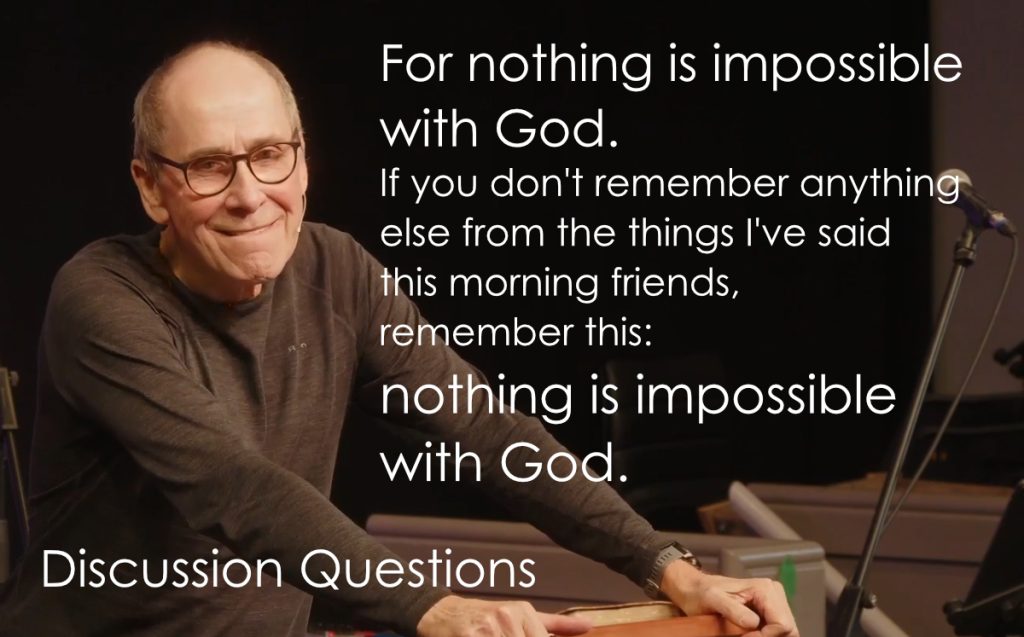
FAMILY DISCUSSION QUESTIONS
- The Concept of Miracles:
- What do you think about the idea that “nothing is impossible with God”? How can this belief impact our lives?
- Understanding the Birth of Jesus:
- How does the story of Jesus’ birth challenge our understanding of miracles and the natural world?
- Faith and Doubt:
- How do you personally relate to the idea of having faith in something that seems unbelievable? Can you recall a time when you had to rely on faith?
- Role of Mary and Joseph:
- What qualities do you admire in Mary and Joseph’s responses to God’s plan for them? How can we demonstrate these qualities in our own lives?
- Responding to God’s Call:
- The sermon mentioned that sometimes God asks us to do things that don’t seem logical. Have you ever felt called to do something unexpected? How did you handle it?
- Relationships and Forgiveness:
- The sermon touched on reconciling relationships. Why is forgiveness important, and how can we practice it in situations where we feel wronged?
- Facing the Impossible:
- Is there an “impossible” situation in your life right now? How might you begin to approach it differently after hearing this message?
- Reflection on Christmas:
- How does the story of Jesus’ birth inspire you to think about the true meaning of Christmas? What traditions help you focus on this meaning?
- Lessons from Elizabeth’s Story:
- What can we learn from Elizabeth’s unexpected pregnancy in her old age? How does this part of the story illustrate God’s power and timing?
- Personal Growth:
- How can we use times of doubt or difficulty to grow in our faith and understanding of God’s plan for us?
GENERAL QUESTIONS
How does the concept that ‘nothing is impossible with God’ challenge your perspective on the seemingly insurmountable obstacles you’re currently facing in your life?
What does it mean for you personally that God chose to enter the world not through power and majesty, but through the vulnerability of a baby born in humble circumstances?
Mary and Joseph both faced situations that required tremendous faith and courage in the face of community judgment. How might God be calling you to demonstrate similar boldness in your own context?
The sermon describes childbirth as ‘a messy business’ and emphasizes the ordinary nature of Jesus’s birth. How does the incarnation of God in such earthly, messy circumstances speak to the areas of your life that feel chaotic or undignified?
Elizabeth’s pregnancy in old age and Mary’s virgin conception both defy natural law. What ‘impossible’ prayer requests have you given up on that God might be inviting you to bring before Him again?
Joseph is described as the hero who chose to stand with Mary despite community pressure and personal hurt. Where might God be calling you to be a protector or advocate for someone facing judgment or rejection?
C.S. Lewis stated that miracles don’t break the laws of nature but rather introduce something new that nature then takes over. How does this understanding of miracles affect your faith in God’s ability to intervene in your circumstances?
The sermon emphasizes that Jesus came for ‘all kinds of people’—saints and sinners, Jews and Gentiles, rich and poor. Who in your life might feel excluded from God’s love, and how can you reflect the inclusive nature of Christ’s coming?
Mary is praised for humbly accepting a path of discipleship that could have brought shame or death. What sacrifices or risks is God asking you to accept in your own journey of faith?
The writer of Hebrews says that ‘without faith it is impossible to please God.’ How does the Christmas story of miraculous births and divine intervention challenge you to move from intellectual belief to active, trusting faith?
0 Comments