
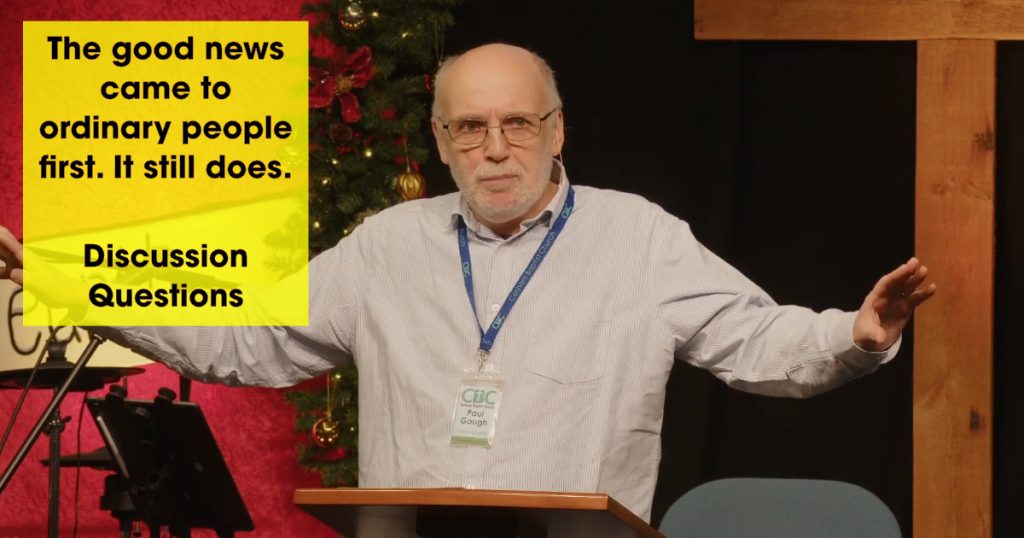
The shepherds were considered ordinary, uneducated, and marginalized, yet God chose them to hear the good news first. What does this reveal about who God values and how should this shape the way we view ourselves and others in our community?
The sermon emphasizes that the shepherds didn’t just hear about Jesus but were motivated to go and see Him for themselves. How does moving from merely hearing about Jesus to personally encountering Him transform the way we share our faith with others?
Paul mentions wanting to ‘sing along’ during musicals because he wants to be part of the action. In what ways do we sometimes hold back from fully participating in the joy of the gospel, and what might be preventing us from ‘singing along’ with what God is doing?
The shepherds allowed their schedules to be interrupted by God’s message. Are we genuinely open to divine interruptions in our daily lives, and what might we need to surrender to make room for God’s unexpected direction?
The sermon states that people today don’t just want to hear about Jesus but want to see Jesus in us. How well does our lived experience match our spoken words about faith, and where might there be gaps that hinder our witness?
Paul contrasts motivation by fear of judgment versus motivation by experiencing God’s love and grace. How does our motivation for sharing the gospel affect both our approach and the receptiveness of those we’re trying to reach?
The shepherds responded with urgency and didn’t ‘dilly-dally’ in sharing what they had witnessed. What causes us to hesitate or delay in sharing the good news, and how can we recapture that sense of urgency without being pushy?
The message emphasizes that the gospel is ‘enormous’ and still has the power to transform lives, even turning lifelong atheists to faith. Do we truly believe in this power, and how does our level of belief affect our boldness in evangelism?
Paul prays to be ‘so happy that people ask why’ and to leave joy behind wherever he goes. What practical steps can we take to cultivate this kind of contagious, Christ-centered joy in our daily interactions?
The sermon concludes with Paul saying that if he becomes really grumpy, people should ‘shoot him’ because it’s not good news for the world. How seriously do we take the impact of our attitudes and emotions on our witness, and what accountability do we need to maintain joy?
- Ordinary People and Extraordinary Messages:
- How do you think the shepherds felt when they received the message from the angels?
- Have you ever experienced something extraordinary during a regular day? How did it affect you?
- The Role of Surprise in Joy:
- Why do you think surprises, like the one the shepherds experienced, often bring joy?
- Can you recall a time when you were surprised by something good? How did you share that joy with others?
- Curiosity and Seeking:
- The shepherds were curious to see what the angels had told them. How does curiosity lead us to discover more about our faith or the world around us?
- Is there something you’ve recently become curious about that you’d like to explore further?
- Divine Interruptions:
- How do you think allowing God to interrupt your plans can lead to joy and growth?
- Have you ever experienced a “divine interruption”? How did it change your perspective or direction?
- Sharing Joy:
- Why is it important to share joyful experiences with others? How can that positively impact those around us?
- How do you currently share joy with your family, friends, or community?
- Choosing Joy:
- The sermon mentioned choosing to be joyful. What are some practical ways we can make the choice to be joyful even when circumstances are challenging?
- How does being around joyful people affect your own mood and outlook on life?
- The Power of the Gospel:
- The sermon discussed the enormity of the Gospel’s message. How do you understand the power of this message in today’s world?
- In what ways can we, as a family, help spread the message of the Gospel in our daily lives?
- The Joy of Knowing Jesus:
- How does knowing Jesus personally bring joy into your life?
- Share a personal story of how your faith has brought you joy or comfort in a difficult time.
0 Comments