
In a world that often feels shrouded in darkness, where fears and uncertainties loom large, we find ourselves yearning for a glimmer of hope. The challenges we face today – from global conflicts and climate change to personal struggles with mental health and financial worries – can leave us feeling overwhelmed and searching for answers. But what if there was a light powerful enough to pierce through even the deepest shadows?
This light of hope was prophesied long ago, in a time when people were also grappling with fear and uncertainty. The ancient prophet Isaiah spoke of a coming Messiah who would bring an end to gloom and distress, a figure whose very nature would embody hope for all humanity. This prophecy, written some 700 years before its fulfillment, offers us a profound message that resonates just as strongly today.
Isaiah’s words paint a vivid picture: “The people walking in darkness have seen a great light; on those living in the land of the shadow of death, a light has dawned.” This light, he proclaims, will come in the form of a child – a royal birth that will change everything. But this is no ordinary child. Isaiah describes him with four powerful names, each revealing a facet of his extraordinary character:
- Wonderful Counselor
- Mighty God
- Everlasting Father
- Prince of Peace
Let’s explore each of these names and what they mean for us today.
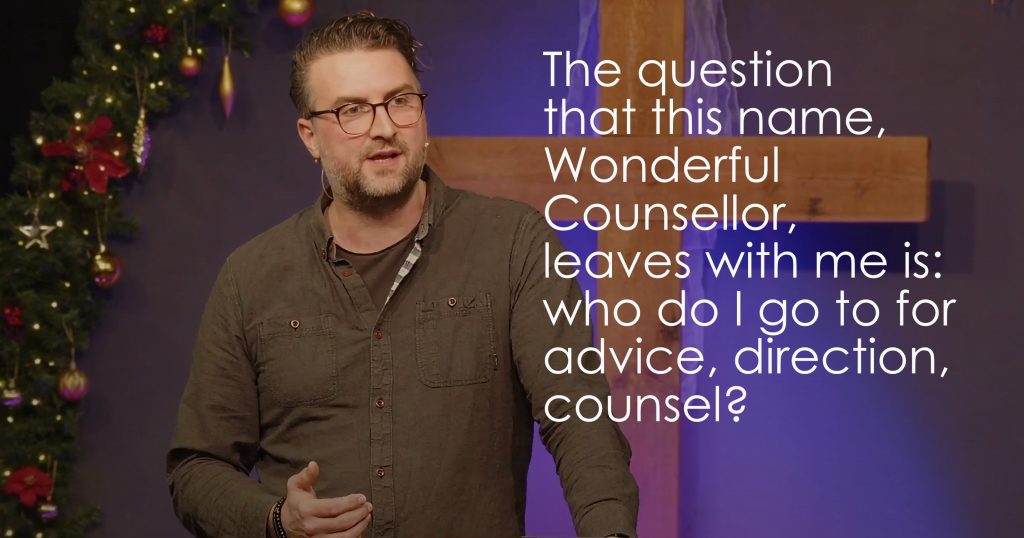
Wonderful Counselor speaks to the wisdom and guidance this figure brings. In a world where we’re often told to “look within” or “follow our heart,” we’re offered a different path – one of divine counsel that surpasses human understanding. This Counselor doesn’t just offer good advice; his guidance is described as “wonderful” – awe-inspiring, beyond our ability to fully comprehend. It’s a reminder that true wisdom comes not from within ourselves, but from a higher source.
Mighty God reminds us of the power and strength of this promised one. In ancient times, stories were told of mighty warriors who would go to great lengths for their kings – even fighting through enemy lines just to fetch a drink of water. How much more mighty, then, is the God who fights for us? This name assures us that no challenge is too great, no obstacle insurmountable for the one who holds all power in his hands.
Everlasting Father paints a picture of tender, enduring love. It’s important to note that this isn’t the image of a harsh, domineering father, but one of compassion and care. The Hebrew word used here for compassion is rooted in the word for “womb,” evoking the deep, instinctive love a mother has for her child. This Father’s love is not fleeting or conditional – it is everlasting, extending beyond the boundaries of our earthly existence and into eternity.
Prince of Peace speaks to the harmony and wholeness this figure brings. In a world torn apart by conflict – between nations, ideologies, and even within our own hearts – the promise of true peace is revolutionary. This peace isn’t just the absence of conflict; it’s the presence of something greater. It’s reconciliation between God and humanity, between different peoples, and within our own souls.
These names, prophesied centuries ago, find their fulfillment in Jesus Christ. His life, death, and resurrection embody each of these characteristics, offering hope to a world in desperate need. But this hope isn’t just a distant promise – it’s a present reality for those who choose to embrace it.
The message of hope doesn’t end with recognizing who Jesus is. It extends to how we, as bearers of his name, are called to live. We are invited to be carriers of this hope, to embody these characteristics in our daily lives:
- To offer wise counsel and point others to the source of true wisdom
- To trust in God’s mighty power, even in seemingly impossible situations
- To show compassion and unconditional love, reflecting the heart of the Everlasting Father
- To be peacemakers in our homes, workplaces, and communities
This calling applies no matter where we find ourselves – in hospitals comforting the sick, in schools shaping young minds, or in workplaces where we might be the only one living out these values. We carry the name of the Messiah with us, and with it, the responsibility to let his light shine through us.
The prophet Isaiah concludes his message with a powerful assurance: “The zeal of the Lord Almighty will accomplish this.” Our hope isn’t based on our own efforts or the changing tides of human progress. It’s rooted in the passionate commitment of God himself to bring about his purposes.
As we reflect on this timeless message of hope, let’s ask ourselves:
- Where do we place our hope? In temporary solutions or in the eternal promises of God?
- How does our understanding of God’s character shape our view of hope?
- In what ways can we be bearers of light and hope in the dark corners of our world?
The invitation is clear: to align our hope with the one who was prophesied long ago and who continues to offer light in our darkness today. It’s an invitation to see beyond our current circumstances, to trust in a wisdom greater than our own, to rest in a love that never fails, and to become agents of peace in a fractured world.
In the face of uncertainty and fear, we have a choice. We can succumb to the darkness, or we can embrace the light of hope that has dawned. This hope isn’t a vague optimism or a naive wish – it’s a confident expectation based on the character and promises of God himself.
As we go about our lives, may we carry this hope with us, letting it transform not only our own hearts but also the world around us. For in doing so, we become part of the fulfillment of that ancient prophecy – bearers of light in a world longing for dawn.
Wonderful sermon! All glory and honor to our wonderful counselor, mighty God prince of peace and our everlasting Father.