
In a world often divided by differences, the concept of unity stands as a beacon of hope and strength. But what does true unity look like, especially within the context of faith and community? Let’s explore this profound and transformative idea that lies at the very core of spiritual growth and collective purpose.
At its essence, unity is not just about getting along or tolerating one another. It’s about a deep-rooted, unbreakable bond that withstands the tests of time and tribulation. Imagine a weed with roots so deep that even the most determined efforts can’t eradicate it. This is the kind of unity that God desires for His church – a connection so strong and so deeply embedded that nothing can tear it apart.
To understand the importance of unity, we must first grasp its origins in the very nature of God. The Trinity – Father, Son, and Holy Spirit – exemplifies perfect unity. Three distinct persons, yet one in essence, purpose, and love. This divine unity is the model for how we, as a community of believers, should strive to live and work together.
Throughout history, there have been movements that emphasized one aspect of God’s nature over others. While these focused attentions aren’t inherently wrong, they can lead to an imbalanced understanding of who God is. The truth is, God is community in unity – Father, Son, and Spirit in perfect harmony, working towards the same mission with the same heart.
This understanding of God’s nature should profoundly impact how we view and pursue unity within the church. Disunity is alien to God’s character, and therefore, should be alien to His people. The Apostle Paul, in his letter to the Ephesians, emphasizes this point repeatedly, using the word “one” seven times in just three verses to drive home the message of oneness in body, Spirit, Lord, faith, baptism, and in God the Father.
But unity isn’t just about understanding God’s nature; it’s also about grasping the depth of the gospel message. When we truly comprehend what Christ has done for us – loving us despite our flaws, forgiving us despite our sins – it should compel us to love one another unconditionally. The mystery of the gospel is that it brings together people who were once divided, uniting them under Christ.
The beauty of unity is described poetically in Psalm 133: “How good and pleasant it is when God’s people live together in unity!” This unity is compared to precious oil flowing down, symbolizing God’s presence, blessing, and the work of the Holy Spirit. When God’s people come together in genuine fellowship, it’s a beautiful sight that attracts others and glorifies God.
So, how do we cultivate this deep-rooted unity? Here are four practical steps:
- Access the Power: We must plug into the power source – the Holy Spirit. Unity isn’t something we can manufacture through our own efforts. It requires supernatural strength and love that only comes from being connected to God’s Spirit.
- Accept the Call: Unity requires self-denial. Just as Christ emptied Himself for our sake, we must let go of our desire for control, approval, and personal agenda. It’s about putting others first and submitting to God’s will for the community.
- Acknowledge the Need: Even as believers, we must recognize our ongoing need for salvation from our selfish tendencies. We need daily renewal and forgiveness to combat the sin that still tries to work its way into our hearts.
- Allow for a Challenge: Step out of your comfort zone. Make an effort to connect with someone new, to cross the room and say hello. You never know how God might use that simple act of reaching out to bless someone or to be blessed yourself.
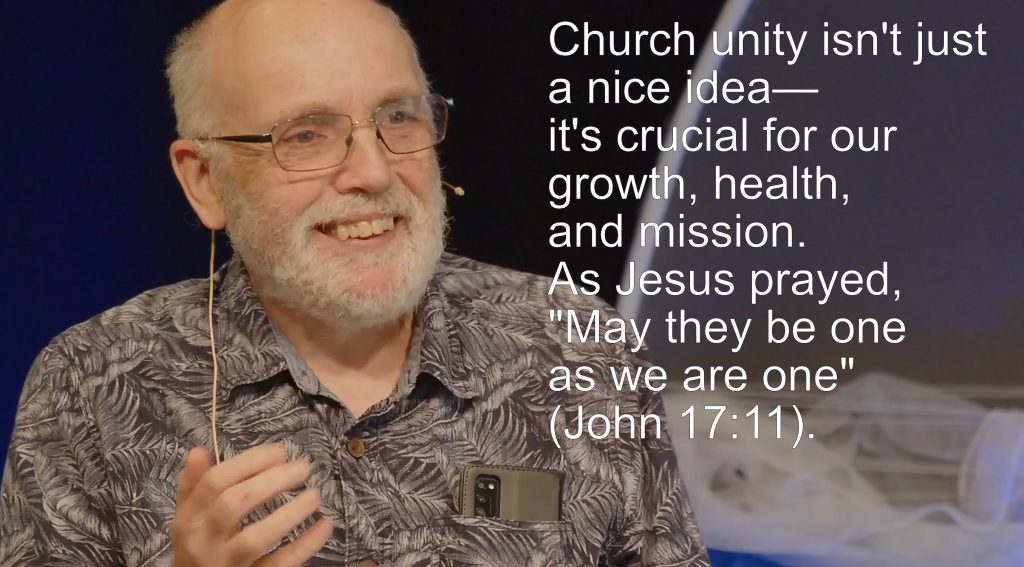
Unity is not just a nice idea; it’s crucial for the health and growth of the church. It honors God and draws others to Him. Jesus Himself prayed for the unity of believers, “that they may be one as we are one” (John 17:11). This unity is a powerful testimony to the world of the transforming power of the gospel.
As we reflect on these truths, let’s challenge ourselves: How can we contribute to the unity of our faith community? Are there barriers we need to break down or relationships we need to mend? Are we plugged into the power source of the Holy Spirit, allowing Him to work in and through us?
Remember, unity doesn’t mean uniformity. It’s about diverse individuals coming together under the banner of Christ’s love, each using their unique gifts to build up the body. As Paul writes in Ephesians 4:16, “From him the whole body, joined and held together by every supporting ligament, grows and builds itself up in love, as each part does its work.”
Let’s commit to being agents of unity, rooted deeply in the love of Christ, unbreakable in our commitment to one another, and unwavering in our pursuit of God’s heart for His church. As we do, we’ll find that this unity becomes a powerful force for good in our communities and a compelling witness to the world of the transformative power of God’s love.
May we be a people who not only understand the importance of unity but who actively work towards it, allowing God’s Spirit to knit us together in love, purpose, and mission. In doing so, we’ll discover the joy, strength, and beauty that comes when God’s people truly live and work as one.
0 Comments