
Key Scripture: Acts 6:8–7:60; Acts 9:1–19 | Revelation 3:20
Overview
What happens when ordinary people simply say yes to God? In the book of Acts, we see that the Holy Spirit is not an abstract idea—He is the agent of radical, disruptive, and life-changing transformation. In this Sunday’s sermon, David explored three figures from Acts: Stephen, Saul, and Ananias. Each encountered the Spirit differently, and together their stories show that the Spirit changes the person who speaks, the person who listens, and the person who responds.
1. Stephen: The Spirit Changes What We Are Willing to Say
(Acts 6:8–15; 7:51–60)
Stephen was one of seven deacons chosen for practical service to care for Greek-speaking widows. Yet he was a man full of the Holy Spirit, grace, and power. When opposition dragged him before the religious court (the Sanhedrin), his face reflected a peace like that of an angel.
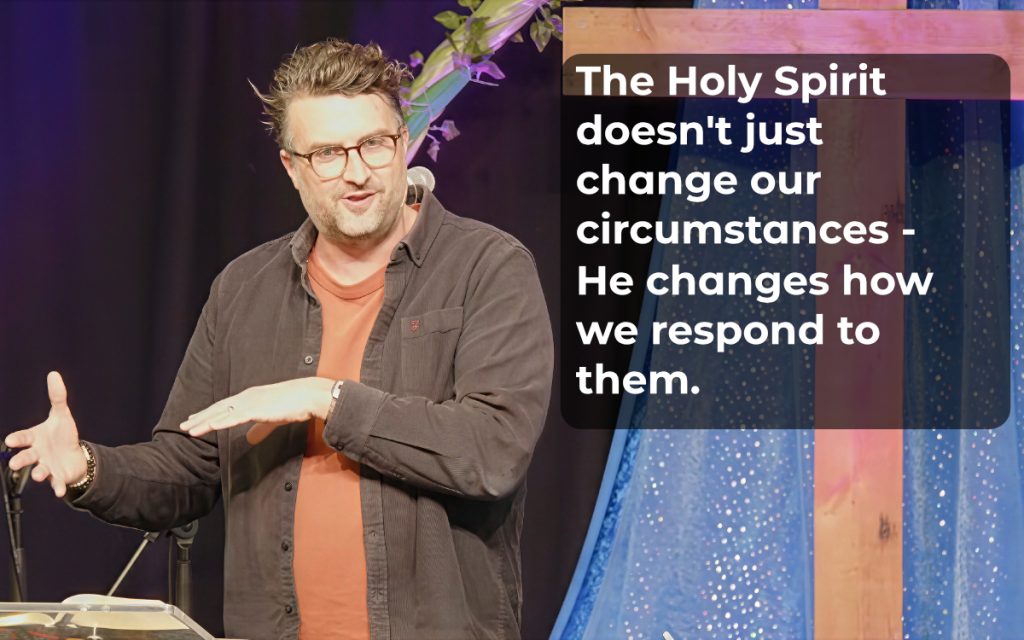
“The Spirit hadn’t necessarily changed his circumstances, but it certainly changed how he responded to those circumstances.” — David
Empowered by the Spirit, Stephen spoke with extraordinary boldness, pointing out how religious leaders had continually resisted God. Even as he was being dragged away and stoned, he prayed for his executioners: “Lord, do not hold this sin against them.” The Holy Spirit produces a capacity for Christlike forgiveness that is simply not natural to human beings.
- Key Takeaway: When pressure comes in our lives, what shapes our response? Fear of what people think, or the Spirit of God?
2. Saul: The Spirit Changes Who We Are
(Acts 9:1–9)
Saul was a religious leader, highly educated and trained in scripture, who was breathing out murderous threats against followers of Jesus. But on the road to Damascus, a light flashed from heaven, and Jesus called him by name: “Saul, Saul, why do you persecute me?”
“Knowing about God and having a living encounter with Jesus are not the same thing.” — David
Saul knew the Scriptures inside out, yet he did not recognize the voice of Jesus. After three days of darkness and blindness—mirroring a form of death—he was filled with the Holy Spirit, scales fell from his eyes, and he was baptized. His old life ended, and a completely new life began.
- Key Takeaway: Head knowledge and religious credentials cannot substitute for a living, personal encounter with Christ.
3. Ananias: The Spirit Changes What We Are Willing to Do
(Acts 9:10–19)
Ananias was a faithful disciple living in Damascus when God called him to visit Saul. Ananias had a very human reaction: “Lord, I’ve heard reports about this man… are you sure about this?” But God simply replied, “Go.”
“Obedience does not require the absence of fear. God isn’t asking you to feel fearless before you act—He is asking you to trust Him with the next step.” — David
Ananias stepped past his fear and obeyed. When he arrived at the house, his very first words were: “Brother Saul.” In less than three days, the man who came to arrest Christians was welcomed into the family of God by one of them.
- Key Takeaway: Where is God asking you to step out in trust? Ananias didn’t need to understand the whole plan; he just needed to obey the next instruction.
An Invitation: Opening the Door
In Revelation 3:20, Jesus says: “Here I am! I stand at the door and knock. If anyone hears my voice and opens the door, I will come in…”
The Spirit is still calling. Whether He is asking you to speak with Spirit-led boldness (like Stephen), surrender into a living encounter (like Saul), or take a brave step of obedience (like Ananias), the invitation is open today.
0 Comments