
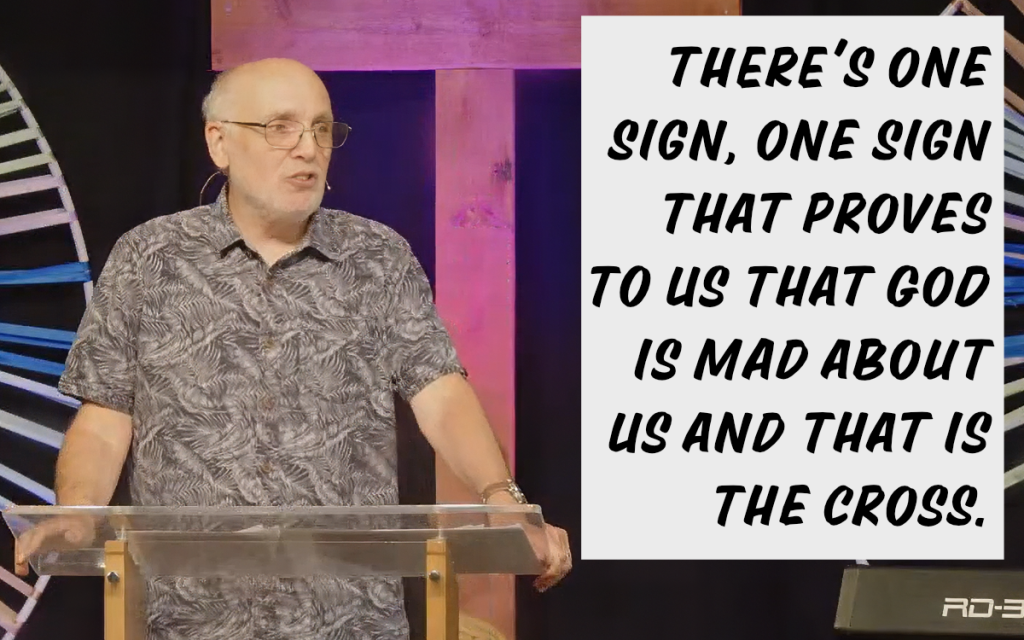
Paul describes God’s love as ‘agape’ — a love that keeps on giving even when ignored or despised — and asks whether we truly know God is mad about us personally; how does your understanding of this kind of love differ from the conditional love we often experience in human relationships?
The sermon suggests that Jesus chose weakness and powerlessness as the means to defeat sin, death, and evil, rather than force or violence; how does this upend your assumptions about what strength and victory look like in your own life and faith?
Paul shares that he chooses to love his estranged brother despite ongoing hatred and false accusations, drawing motivation from God’s love for him; what does it look like practically to love someone who has deeply wronged you, and where do you find the strength to do so?
Romans 5 describes Christ dying for us while we were still sinners and enemies of God, not after we had cleaned ourselves up; how does the timing of God’s love challenge the way you think about who deserves grace and forgiveness?
Paul distinguishes between looking ‘at’ the cross and looking ‘through’ it, suggesting that familiarity can make us lazy in our understanding; in what ways might your familiarity with the story of the crucifixion be preventing you from grasping its full weight?
The sermon connects the tragedy at the Big Church Day Out to Jesus’s response to similar tragedies in Luke 13, where he does not answer ‘why’ but instead calls people to readiness and repentance; how do you personally wrestle with unanswered questions about suffering while still holding on to the love of God?
Paul argues that a genuinely surrendered life of discipleship must begin with knowing you are loved, rather than with duty or fear; in what areas of your faith life are you motivated more by obligation than by a deep sense of being loved by God?
Simon of Cyrene was pulled from the crowd and compelled to carry the cross of Jesus, an ordinary person caught up in an extraordinary moment; what do you think it means for ordinary people today to ‘carry the cross’ in their everyday lives?
The criminal on the cross beside Jesus had no time to perform good deeds, attend church, or live a reformed life before receiving the promise of paradise; how does this challenge any assumptions you hold about what is required to receive God’s love and salvation?
Paul says that to love people who are different from us — even strangers in the same room — is only truly possible when we are secure in God’s love for us; how might a deeper assurance of being loved by God change the way you engage with people you find difficult or unfamiliar?

- “God is mad about you.”
Paul said the cross is the clearest sign that God is madly in love with us.
Question: Do you find it easy or hard to believe that God truly loves you personally — not just “people in general”? Why? - Looking at the cross vs looking through the cross
The sermon challenged us not to be over-familiar with the cross, but to “survey” it deeply.
Question: What helps you keep the cross from becoming just a familiar symbol? Is there a hymn, Bible verse, moment, or practice that brings its meaning home to you? - Love when it isn’t deserved
Paul shared honestly about choosing to love his brother despite hurt and rejection.
Question: How do we love someone who has wounded us without pretending the hurt doesn’t matter? What does Christlike love look like in real life? - Weakness as strength
Jesus defeated evil not through force, pride, or violence, but through humility, suffering, and self-giving love.
Question: As men, do we sometimes struggle to see weakness, gentleness, or vulnerability as strength? Where do we need to let Jesus reshape our idea of strength? - Serving because we’re loved, not because we “have to”
The sermon said duty alone is not enough — discipleship starts with knowing we are loved by God.
Question: When you serve, give, worship, or lead, what usually motivates you: love, duty, guilt, habit, gratitude, something else? How can we live more from God’s love rather than pressure?

- “God is mad about you.”
The sermon reminded us that the cross is the clearest sign of God’s deep, personal love for us.
Question: Do you find it easy or difficult to believe that God delights in you personally? What helps you receive His love? - When life feels tragic or uncertain
Paul spoke about holding onto God’s love even in painful times, when we don’t have easy answers.
Question: When hard things happen, what helps you keep trusting that God is still loving and present? - Looking deeper at the cross
We were encouraged not just to “look at” the cross, but to “look through” it — to see the weight of God’s love behind it.
Question: What part of Jesus’ sacrifice moves you most deeply at the moment? Is there a verse, hymn, image, or experience that helps you “survey the wondrous cross”? - Loved first, then able to love others
The sermon said we can love others because we first know we are loved by God.
Question: Is there a relationship where you need God’s help to love, forgive, or be patient? How might knowing you are deeply loved by Him change the way you respond? - Serving from love, not pressure
Paul challenged the idea of serving God out of guilt, duty, or fear, and reminded us that true discipleship begins with being loved.
Question: In this season, are you more aware of serving from joy and love, or from pressure and expectation? What would it look like to rest again in God’s love?
0 Comments