
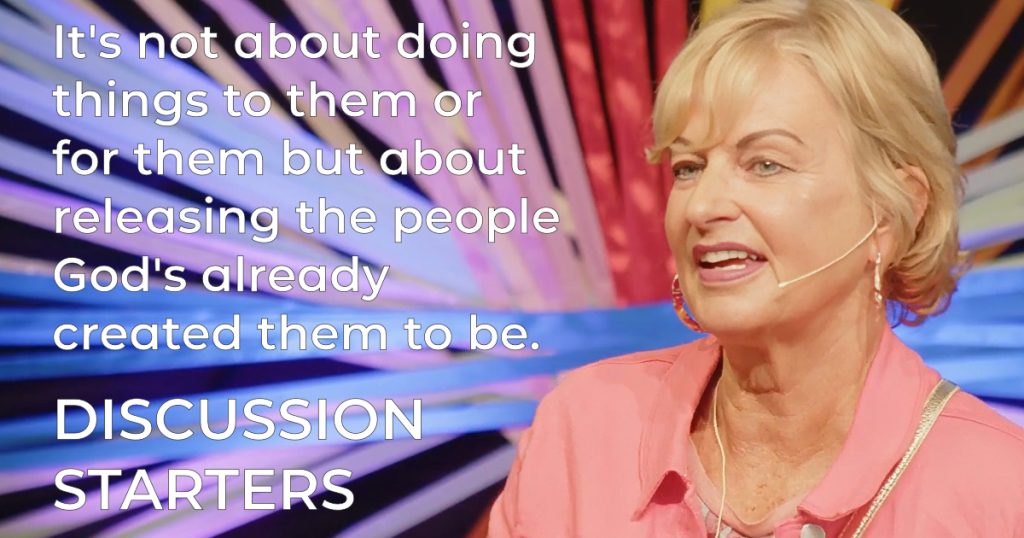
Here are some simple, family-friendly discussion starters you can use around the table. You don’t need to do all of them at once—pick a few that fit your children’s ages and attention span.
1. Imagining Malawi & Impupu
- What stuck with you most from the description of Malawi or the village of Impupu?
- How do you think it would feel to have your home washed away by a cyclone and have to sleep on a school floor?
- Even in very hard times, the people of Impupu were creative (toys, guitars, growing food in strange places).
- What’s one creative way you could use something simple (like a shoelace, bottle, box) to help someone or solve a problem?
- Why do you think people who have very little can sometimes be so joyful and creative?
2. The Boy with the Lunch – John 6:1–14
- In the story of the feeding of the 5,000, who are all the people Jesus involved? (Prompt: the boy, disciples, the crowd…)
- Why do you think Jesus asked questions instead of just doing the miracle by himself?
- The boy only had five loaves and two fish.
- What “small” thing do you have (time, money, kindness, skills) that you could offer to God?
- Have you ever done something that felt too small to matter, but later you saw it really helped someone?
3. Everyone Playing Their Part
- The sermon said: “When we are willing to share what we have, Jesus will do the miracle.”
- What does that mean in your own words?
- At school / work / church / our street, what might “everyone playing their part” look like?
- Is there a time you saw a big difference made because many people did one small thing each?
- As a family, what could “our part” be for people who are struggling—locally or in places like Malawi?
4. Helping with Dignity, Not Just Giving Things
- Eagles doesn’t just “give things out”; they help people see their own gifts and solve their own problems.
- Why is that important?
- How might it feel different to be:
- someone who only receives aid
- vs. someone who helps decide and work on the solution?
- When we give or help (to charities, to friends, to people on the street), how can we do it in a way that respects people’s dignity?
- Think of someone you know who is struggling.
- Instead of asking “What can I do for them?” try: “How can I join what they are already trying to do?”
5. Creativity & Problem-Solving
- The families in Impupu used wetlands, banana trees, roofs, chickens, and even shoelaces creatively.
- Which example surprised you most?
- What are some “resources” we have at home that we usually don’t think of as resources? (e.g., extra food, skills, time, tools, garden space)
- If our family faced a big problem (like not enough water or money), what creative ideas could we come up with together?
- Could we try one “creative helping” idea this week—something that costs little or nothing, but could help someone?
6. The Global Picture & Our Response
- The sermon mentioned that government aid to poorer countries has been cut, and many lives will be lost.
- How does that make you feel?
- Why do you think news about wars is bigger than news about quiet suffering from poverty or aid cuts?
- When big numbers (like “millions of people”) feel overwhelming, how can we still care without shutting down?
- What’s one concrete action our family could take:
- Pray regularly for a specific place (like Malawi)?
- Give a small amount regularly to a group like Eagles?
- Learn more about one country together?
7. Feeling Harassed or Helpless
- The preacher talked about people feeling “harassed and helpless”—overwhelmed or like nothing they do matters.
- Have you ever felt like that? When?
- In those moments, what might it mean to “offer Jesus the little that we have” and let him carry the outcome?
- As a family, how could we help each other when one of us feels overwhelmed or like giving up?
- Is there one “small thing” you could do this week in a situation that feels too big—trusting God to multiply it?
8. One Next Step
- What’s one thing from this sermon you don’t want to forget?
- Is there one habit our family could change to live more like this message (e.g., less wasting food, more praying for other countries, giving, serving together)?
- What’s one tiny step we will take this week because of what we heard?
You can pick a theme for each meal (e.g., “Malawi Monday,” “Miracle Story Wednesday”) and end by praying one simple prayer together, such as:
“Lord Jesus, show us the small thing we can offer you today, and use it to bless others, just like you did with the boy’s lunch. Amen.”
ADULT QUESTIONS
How does the principle of God working through people rather than doing things for them challenge our typical approaches to helping those in need?
In what ways might our well-intentioned charity actually strip people of their dignity and problem-solving abilities?
When Jesus asked Philip where to buy bread, He already knew what He would do. How does this relate to God’s desire for us to participate in His work rather than just receive solutions?
The sermon mentions that development projects are 27 times cheaper when communities use their own resources. What does this reveal about God’s design for human flourishing and community transformation?
How can we discern whether the charitable work we support aligns with biblical principles of empowerment rather than dependency?
The boy’s small offering of five loaves and two fish was multiplied beyond imagination. What small gifts or resources might God be calling you to offer that you’ve dismissed as inadequate?
How does the reality of 23 million projected deaths from aid cuts challenge us to reconsider both the effectiveness and sustainability of our global relief efforts?
In what areas of your life are you feeling harassed and helpless, trying to carry burdens that God wants you to release while you simply offer what you have?
The Eagles approach teaches communities to problem-solve creatively when new crises arise. How can this principle apply to building resilience in our own church communities?
What is the difference between compassion that creates dependency and compassion that awakens people to their God-given potential and resources?
0 Comments