
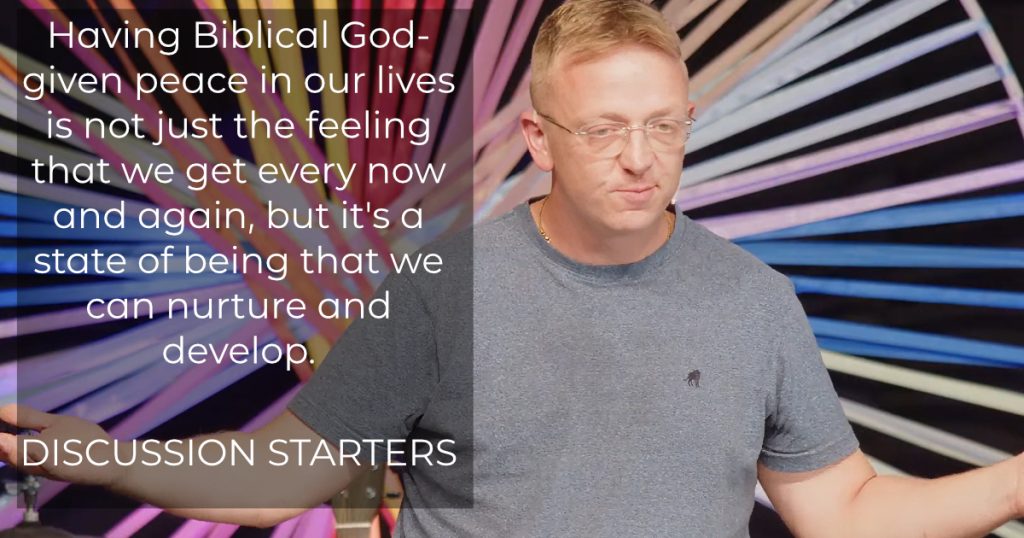
Here are some simple, family‑friendly discussion starters you can use around the table, drawn from the sermon and Daniel 3. You can pick just a few each meal.
1. Storms & Peace
- What is a “storm” in life that you have faced recently (big or small)?
- The preacher talked about the “eye of the storm” – calm in the middle of chaos.
- What do you think that looks like in real life, not weather?
- When life feels stormy, what do you usually do first?
- Talk to someone? Worry? Pray? Distract yourself?
- Can you think of a time you felt God’s peace even though the situation hadn’t changed?
2. Shadrach, Meshach & Abednego
- Why do you think Shadrach, Meshach and Abednego refused to bow to the statue, even though it meant the furnace?
- If you were in their place, what thoughts might be going through your mind as the furnace was being heated “seven times hotter”?
- What do you think gave them such courage to say, “we will not serve your gods”?
- Is there a situation at school, work, or with friends where you might need that kind of courage to do what’s right?
3. “God Can… But Even If He Does Not”
- Read or recall their words:
“The God we serve is able to deliver us… but even if he does not, we will not serve your gods.”
What do these words mean in your own language? - How do you feel about the idea that God is able to do miracles, but sometimes doesn’t do what we hope?
- Do you find it harder to:
- Believe that God can do miracles, or
- Trust Him when the miracle doesn’t happen?
- What might it look like for us, as a family, to say: “We trust God, even if He doesn’t do what we want”?
4. Everyday Choices & Deep Peace
- The sermon said peace is not just a feeling but a “state of being” shaped by many little choices.
- What are some small daily choices that draw you closer to God?
- How do you usually make time for God during your day (or how could you start)?
- If you had to rate “Jesus being number one in your day” from 1–10, where would you put yourself right now, and why?
- What’s one small change our family could make this week to help us seek God’s peace together?
5. False Sources of Peace
- The preacher mentioned thinking “If I just had more money / a better job / a bigger house, then I’d have peace.”
- What are some things you tend to say, “If I just had _, I’d feel OK”?
- Do those things really bring lasting peace, or only temporary relief? Why?
- How can we tell the difference between God’s peace and the world’s “quick fixes”?
6. Jesus in the Fire
- Nebuchadnezzar saw a fourth person in the fire. The sermon said this was Jesus with them.
- What does it mean to you that Jesus is “in the fire” with us?
- When you are going through something hard, does it help to think “Jesus is with me in this”? Why or why not?
- Can you share a time when you only realized afterwards that God had been with you in a difficult season?
7. When Healing Doesn’t Come (Yet)
- The sermon asked: what if some things are not fully fixed “this side of heaven”?
- How does that idea make you feel?
- How can we keep trusting God when our bodies hurt, our minds struggle, or our situations don’t change?
- What promises of God (verses, songs, truths) help you hold on when life is not getting better quickly?
8. Hope of Heaven & Perseverance
- The preacher talked about Marjorie “having made it” to be with Jesus.
- What do you imagine heaven to be like?
- How does knowing that we will have a new, perfect body one day change how we see suffering now?
- What do you think it means to “persevere” in faith?
- Is there someone you know who has persevered in faith through hard times? What can we learn from them?
9. Family Application
- What is one “storm” our family is facing together right now?
- How can we remind each other that Jesus is with us in this storm?
- What is one practical way we can seek God’s peace together this week?
(Examples: praying together before school/work, reading a Psalm at dinner, worship music in the car, etc.) - Is there something we could start praying boldly for as a family, believing God can do miracles, while also trusting Him “even if He does not”?
You can print these, cut them into slips, and pull a few from a bowl each meal, or just pick 3–4 that feel most relevant to where your family is right now.
ADULT QUESTIONS
How do the daily choices we make in our relationship with Jesus prepare us to have peace when life’s most severe storms arrive?
What does it mean to have peace as a ‘state of being’ rather than just a temporary feeling, and how can we cultivate this in our spiritual lives?
Shadrach, Meshach, and Abednego said ‘even if he does not’ deliver us, we will still trust God. Where do we draw the line in our own faith when God doesn’t answer our prayers the way we hope?
In what ways might we be tempted to bow to modern-day ‘golden statues’ such as wealth, career success, or comfort in order to avoid difficulty or persecution?
How does the image of Jesus as the fourth man in the fire with Shadrach, Meshach, and Abednego change our perspective on the storms we currently face?
What is the difference between praying boldly for miracles while simultaneously accepting that God’s deliverance might not come this side of heaven?
How can reflecting on Jesus riding into Jerusalem on a donkey, knowing what awaited Him, help us find peace when our bodies or minds are not fully healed?
What practical steps can we take to ensure our minds are ‘steadfast’ and focused on God, as described in Isaiah 26:3, especially during turbulent times?
How does Marjorie’s perseverance through life’s storms and her arrival at glory encourage us to maintain hope even when our circumstances don’t improve?
In what ways can we nurture our spirit and trust that God holds the deepest parts of us, even when our physical or mental struggles seem overwhelming?
0 Comments