
1. Feeling Homesick & Exile
- When have you felt homesick or “out of place”? What made you feel that way?
- The preacher talked about God’s people being “in exile” and feeling homesick. In what ways can Christians today feel like they don’t “fit” in the world?
- Adam and Eve were sent out of the garden; Israel went into Babylon; early Christians lived under foreign powers. What might “exile” look like for us in our ordinary lives (school, work, friendships)?
2. “This World Is Not Our Home”
- 1 Peter calls Christians “exiles” and “strangers.” What do you think it means that we “don’t belong here”?
- If heaven is our true home, how should that change the way we make decisions now (about money, time, career, friendships)?
- Have you ever felt like a “spiritual oddball” because you follow Jesus? What happened? How did that feel?
3. Not Settling – Being Pilgrims, Not Settlers
- The sermon contrasted Terah (who “settled”) with Abraham (who kept travelling). In what ways can Christians “settle down” spiritually and stop growing?
- Are there any areas of life where we have become too comfortable, where God might be nudging us to move, change, or grow?
- The preacher joked that maybe Christians shouldn’t buy houses but live in tents like Abraham. What truth was he getting at with that image?
4. Itchy Feet & Following God’s Call
- Do you feel any “spiritual itchy feet” – a sense that God might be calling you to something new (a new habit, ministry, friendship, act of courage)?
- What makes it hard to listen to God’s nudges and step into something unfamiliar?
- How could we, as a family, stay “pilgrim-minded” instead of “settler-minded”? What practical things might that mean this year?
5. Grasping vs. Giving
- The sermon mentioned that Christians are already rich in Christ. What do you think that means, practically?
- How does our attitude to money show what our heart really loves and trusts?
- The exiles in Jeremiah were told to pray for the peace and prosperity of the place that had taken them captive. What would it look like for us to “bless” and “refresh” the people and places around us, even if they don’t share our beliefs?
- Is there a way we, as a family, could be more generous this month—with money, time, or hospitality?
6. Peace in Exile – Jesus’ Gift of Shalom
- Jesus said, “My peace I give you… Do not let your hearts be troubled, and do not be afraid.” How is Jesus’ peace different from the world’s idea of peace?
- The preacher described Jesus’ peace as:
- Refreshing
- Robust (strong in hard times)
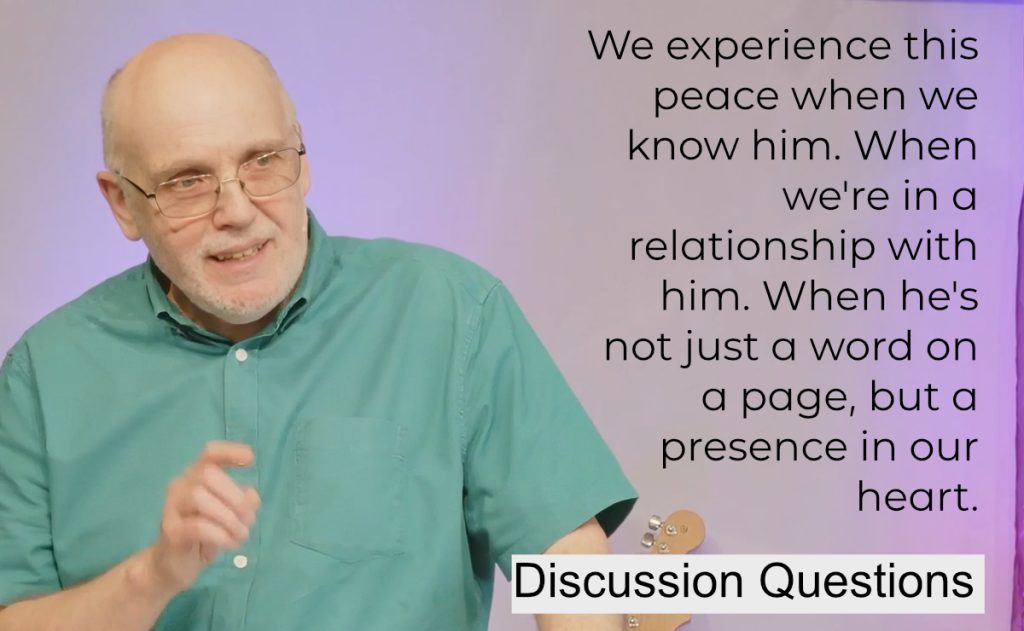
- Relational (found in knowing Jesus)
Which of these descriptions stands out most to you, and why?
- Can you remember a time when you felt a deep sense of God’s peace, even if your situation was still difficult? What was that like?
- What are some “if only” thoughts we have (e.g., “If only I had X, then I’d be at peace”)? How does Jesus challenge those?
7. Trust, Worry, and Focusing on Jesus
- The sermon ended with Isaiah 26:3 about God keeping in perfect peace those whose minds are steadfast. What helps you keep your mind fixed on Jesus during the week?
- What do you worry about most at the moment? How might Jesus’ peace speak into that specific worry?
- As a family, how could we build a simple rhythm that helps us receive Jesus’ peace (e.g., short evening prayers, a weekly time of gratitude, reading a verse together)?
8. Homecoming Hope
- The preacher said our homesickness will one day turn into our homecoming. What do you imagine about being “at home” with God forever?
- How does the hope of a future home with God help us live differently in the middle of today’s struggles?
GROWN UP QUESTIONS
How does understanding ourselves as spiritual exiles rather than permanent residents of this world change the way we approach our daily decisions and priorities?
Abraham refused to settle and continued his pilgrimage toward the promised land while his father Terah settled down. In what areas of your spiritual life might you be settling rather than continuing to journey forward?
The sermon mentions three reasons for exile: disobedience, desert experiences for growth, and the decision to follow Jesus. Which of these resonates most with your current season of life and why?
What does it mean practically to pray for the peace and prosperity of an environment that feels hostile or alien to Christian values, as Jeremiah instructed the exiles to do?
How can Christians balance being generous givers while also being wise stewards, especially when facing financial struggles or uncertainty?
Jesus promised peace to his disciples even as they faced persecution and martyrdom. How do we reconcile this promise with the very real troubles and anxieties we experience in our daily lives?
The sermon suggests that the UK church has made a mistake by settling down and making faith comfortable rather than challenging. Do you agree or disagree, and what evidence do you see either way?
What does it look like to have spiritually itchy feet in your context, and how can you discern whether restlessness is from God or simply personal dissatisfaction?
Paul and Silas sang praises in prison facing possible execution, demonstrating robust peace. What practices or disciplines help you maintain peace in the harshest conditions you face?
The Muslim mother experienced profound peace when she genuinely opened herself to God’s presence. How does relational intimacy with Jesus differ from simply knowing biblical principles about peace?
0 Comments