
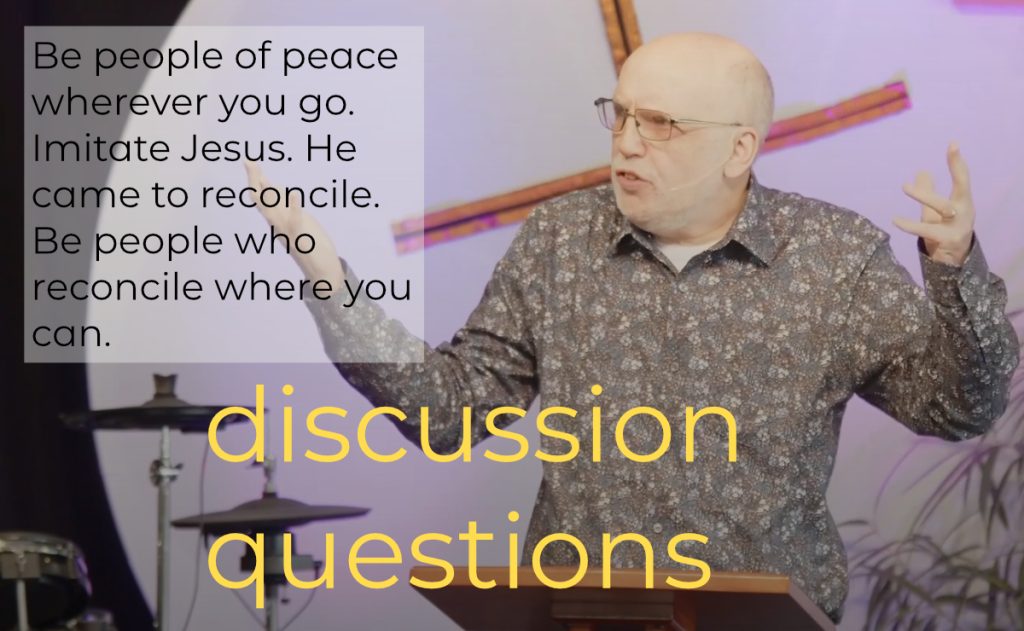
Here are some simple, family-friendly discussion starters you can use around the table. You can pick just a few each meal and adapt the wording for younger kids.
1. “Everything” and the Cross
- The sermon kept repeating “all things” and “everything.”
- What do you think it means that Jesus is reconciling everything to himself, not just people?
- Can you name some “things” in the world that you’d love to see Jesus fix or restore?
- Think about wars, climate change, poverty, arguments in families, bullying at school or work.
- Which of these worries you the most right now?
- How does it change things to believe Jesus is at work reconciling “all things”?
- If you could ask Jesus one “big world” question (about wars, climate, injustice, etc.), what would you ask him?
2. Who Is Jesus?
- The sermon said Jesus is “the image of the invisible God.”
- In your own words, what does that mean?
- When you imagine what God is like, what do you picture Jesus doing or saying?
- The preacher said, “When you see Jesus, you see God.”
- What stories about Jesus (from the Gospels you know) show you what God’s heart is like?
- Jesus is also called “firstborn over all creation.”
- How would you explain that to a friend your age?
- What does it say about Jesus’ importance and power?
3. The Cross: More Than “Just Me and Jesus”
- We often say, “Jesus died for my sins.”
- Why is that true and important?
- But how is the cross also bigger than just “me and Jesus”?
- The sermon called the cross “cosmic love.”
- What words or pictures come to your mind when you hear that phrase?
- How is “cosmic love” different from just “Jesus loves me” in a small way?
- If someone at school/work asked, “What was Jesus doing on the cross?”
- How would you answer in 1–2 sentences?
4. Praise, Peace, Participate
- PRAISE: The preacher said one response is praise.
- What is one thing about Jesus from this sermon that makes you want to praise or thank him?
- If we were to write a one-line family “praise sentence” to Jesus, what would it say?
- PEACE: We heard, “He’s got the world in his hands. He’s got you.”
- What worries you most these days?
- What difference might it make if you really believed, “Jesus has reconciled this to himself”?
- PARTICIPATE: If Jesus is reconciling all things, we’re invited to join in.
- Where in your everyday life do you see brokenness or conflict (home, school, neighbours, news)?
- What is one small reconciling thing you could do this week (say sorry, forgive, include someone, pray, give, speak up, help)?
5. Creation and God’s Care for the World
- The sermon mentioned the rainbow and God’s promise after the flood.
- What does that promise tell us about how God feels about all living creatures?
- How could that shape the way we treat the environment and animals?
- If God cares about “all things,” not just people:
- How might that change how we think about rubbish, energy, food waste, or how we treat the planet?
6. Faith and Doubt
- Some people in Jesus’ day, especially the religious leaders, refused to believe who he was.
- Why do you think it can be hard for clever or successful people to trust Jesus?
- What makes it hard or easy for you to trust him?
- The sermon said God is patient and is holding back final judgment so more people can come to know him.
- How does that make you feel about God?
- Is there anyone you want to pray for, that they would come to know Jesus?
7. Bringing It Home
- If we really believed Jesus is reconciling all things:
- What might change about how we talk about the news at home?
- How might it change how we talk to each other?
- What is one practical way our family could “participate” in Jesus’ reconciling work this week?
- At home?
- In our street/school/workplace/church?
- Looking ahead to Easter:
- What part of Easter means the most to you personally—Good Friday (the cross) or Easter Sunday (the resurrection), and why?
- How does this sermon widen your view of what God was doing between Good Friday and Easter Day?
ADULT QUESTIONS
How does understanding that Christ reconciled ‘all things’ rather than just individuals change the way you view the purpose of the cross?
In what ways can we be ‘people of peace’ who participate in God’s reconciling work in our daily lives and communities?
What does it mean for your faith that Jesus is described as the exact image of the invisible God, and how does this impact your understanding of who God is?
Why do you think the proud and educated in Jesus’ day struggled to believe in Him while the needy and suffering readily accepted Him?
How does the concept that Jesus holds everything together affect your response to global crises like war, climate change, and political instability?
What comfort or challenge do you find in the idea that God is being patient with final judgment because He wants everyone to know His love?
How might viewing the cross as a cosmic work of reconciliation rather than just personal salvation change the way you share the gospel with others?
In what areas of brokenness around you—whether in relationships, communities, or creation—can you participate in Christ’s reconciling work?
Why do you think God chose the way of sacrificial love on the cross rather than simply obliterating evil through power and force?
What does it mean practically to receive the peace of the exalted Christ in the midst of your current troubles and uncertainties?
0 Comments