
Three months. That’s how long the journey took from Egypt to the foot of Mount Sinai. Three months of wandering through wilderness, of uncertainty, of learning to trust. The Israelites had witnessed miracles—the parting of the Red Sea, provision of manna, water from rocks—yet they still struggled with trust issues. Can you blame them? They had just escaped centuries of slavery, an abusive relationship with Pharaoh that left deep emotional scars.
Standing at the base of that mountain, they were about to encounter God in a way that would forever change their understanding of who He is.
The Power of Worship Over Worry
Back in Exodus 15, fresh from their dramatic escape through the Red Sea, the people sang. Moses and the Israelites lifted their voices: “I will sing to the Lord, for he has triumphed gloriously. He has hurled both horse and rider into the sea. The Lord is my strength and my song; he has given me victory.”
There’s something profound about worship. You cannot simultaneously worry and worship. One will always win. When we give our praise to God, when we lift our voices and hearts in adoration, our worries begin to fade. Worship isn’t just a Sunday morning activity—it’s a lifestyle that transforms our minds, spirits, and emotions. It creates the conditions for spiritual transformation.
But the singing stopped. The worrying grew louder. The complaints multiplied.
Perhaps the people assumed that rescue from Egypt meant immediate arrival in the Promised Land. Freedom should come quickly, shouldn’t it? Yet they were learning that the journey to true freedom—the long walk to liberty—takes time. God’s first mission wasn’t just to set them free from something, but to set them free for something: to worship Him.
As humans, we are designed to serve and worship. The question is: whom will we serve? The tyrant or the Liberator?
Three Beautiful Images of God’s Love
Before the thunder and lightning, before the smoke and trumpet blasts, before the fearsome display of God’s holiness, He spoke words of tender reassurance. He gave three intimate metaphors to help His people understand His heart toward them.
First, the image of eagle’s wings. “You have seen what I did to Egypt, and how I carried you on the wings of eagles and brought you to myself.”
Picture a young eaglet, struggling to fly, blown off course by fierce winds, predators closing in. Suddenly, the mother eagle swoops down, catches the struggling chick, and carries it to safety. “You’re mine,” she seems to say. “I’ve got you.”
This is our God. A defender. A protector. A carrier. When we’re overwhelmed, when life’s storms threaten to destroy us, when we cannot manage on our own strength, He swoops in and carries us.
Second, the image of treasured possession. “You will be my own special treasure from among all the peoples on earth.”
The Hebrew word is segula—treasure. Imagine a monarch with vast wealth at their disposal, yet they have one sentimental item that means more than everything else combined. A grandmother’s necklace. A father’s ring. Or picture a parent scanning a crowded playground, eyes searching for that one special face.
This is how God sees you. Not as one among billions, but as His treasured possession. His segula. The one He values above all else.
For people emerging from slavery, carrying trauma and trust issues, this declaration was life-giving. God wasn’t demanding payback for the Red Sea rescue. He wasn’t using threats or compulsion. He was simply stating His commitment to love them with dignity and honor.
God promises to love us back to strength.
Third, the image of a kingdom of priests. “You will be my kingdom of priests, my holy nation.”
Priests reflect God’s presence to the world. They serve as angled mirrors, reflecting His glory. This was humanity’s original calling, and it remains our calling today. As Peter writes in the New Testament, we are “living stones” being built into God’s spiritual temple, “royal priests” called to show others the goodness of God.
We enjoy freedom so that we can set others free.
The Covenant Relationship
A covenant is a binding agreement between two parties, sealed with an oath and an outward symbol. The closest modern equivalent is marriage—legal vows and a ring that pledges faithfulness.
God made a covenant with His people. “If you obey me fully and keep my covenant, you will be my treasured possession.” Three times the people enthusiastically responded: “We will do everything the Lord has commanded!”
The problem? Turn a few pages and they’re bowing down to a golden calf.
We’re not so different, are we? We promise obedience, yet we bow down to other gods—success, comfort, approval, security. We fail to keep our side of the covenant.
But here’s the beautiful truth: God remains faithful. When we come to communion, we remember the new covenant—not because the old one failed on God’s side, but because we needed a better way. Through Jesus, God says, “I’m still faithful. I still want you as my treasured possession. The question is: will you come back to me?”
Not like the younger son who enjoys his freedom and refuses to return. Not like the older son who works hard but resents the relationship. But like the repentant child who says, “Thank you for loving me. I want to be part of this covenant.”
Holy Fear and Awesome Love
Mount Sinai was terrifying. Thunder. Lightning. Smoke. Fire. Trumpet blasts. The people were warned: “Do not come near the mountain or you will die.”
This seems harsh to our modern sensibilities. We prefer the nearness of God, the intimacy Jesus offers. We love that the Son of God became Emmanuel—God with us. We celebrate that Jesus opened a new and living way into God’s presence.
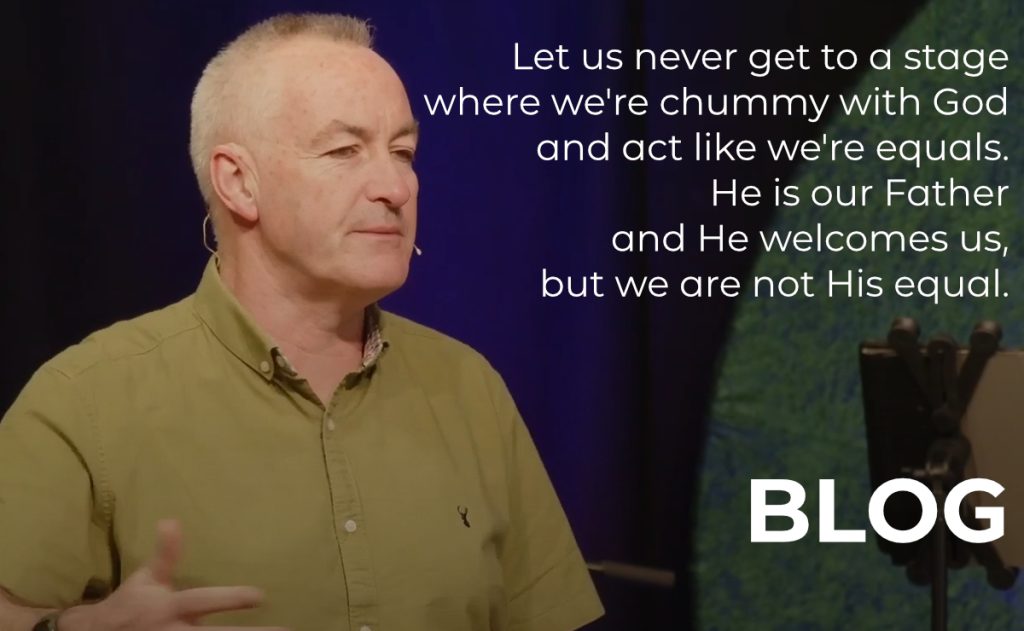
But let’s not become so familiar that we forget who God is.
Yes, He is our loving Father who welcomes us. But we are not His equals. He is holy. He is awesome. He is a consuming fire.
The writer of Hebrews captures this tension beautifully. We haven’t come to a physical mountain of fire and darkness where people trembled in fear. We’ve come to something far greater—the heavenly Jerusalem, the assembly of God’s firstborn, the presence of Jesus who mediates a new covenant.
Yet the warning remains: “Be careful that you do not refuse to listen to the one who is speaking… Since we are receiving a kingdom that is unshakable, let us be thankful and please God by worshiping him with holy fear and awe. For our God is a devouring fire.”
Preparing Our Hearts
When Queen Victoria visited a humble village in the late 1800s, the townspeople prepared with utmost care. They cleaned the streets, arranged their clothing, attended to every detail. They understood the importance of properly receiving royalty.
How much more should we prepare our hearts to meet with the King of Kings?
Do we examine ourselves before coming into God’s presence? Do we make things right with others? Do we fast and pray? Do we get our minds and hearts ready for worship, or do we just casually show up?
Genuine worship acknowledges both God’s unequaled power and His inexhaustible love. He is awesome in holiness, yet amazing in mercy. The God who blazed on Sinai is the same God who rescues us like an eagle.
He is to be loved and feared.
You Are His Treasured Possession
This week, you may be tempted to believe you’re a slave to your past, to your anxiety, to your failures. But the holy God of Sinai says something different.
“You are my segula. My treasured possession. The one I value.”
Hold that truth in your hands like the precious thing it is. Then lift your hands in offering and say, “God, I want to come before you in your awesomeness, knowing I’m loved, knowing I’m valued. I offer myself to you, my holy, almighty God.”
Walk in this freedom. Shine brightly. Live rightly. Be faithful.
For you worship the God of truth and love, the God of holiness and peace.
You worship the God who carries you on eagle’s wings.
0 Comments