
We live in a broken world. Look around, and you’ll see it everywhere—in natural disasters, fractured relationships, political corruption, and personal struggles. Things are simply not the way they were supposed to be. Genesis 1:21 tells us that God looked over all He had made and saw that it was “very good.” So what happened? How did we get from “very good” to deeply broken?
The Perfect Beginning
Before we can understand what went wrong, we need to remember what was right. The early chapters of Genesis paint a picture of absolute perfection. God created a world of abundance and placed humanity in a garden designed for flourishing. Adam and Eve enjoyed three remarkable gifts:
First, they had intimate fellowship with God Himself. There were no barriers, no shame, no hiding. They walked with their Creator in the cool of the day.
Second, they experienced perfect human relationship. Genesis 2 tells us they were “both naked and felt no shame.” This wasn’t just about physical nakedness—it was spiritual transparency. They had nothing to hide from each other, no insecurities, no comparison, no competition. They looked outward at God and each other, not inward at themselves.
Third, they were given meaningful work—stewarding the earth’s resources, cultivating the garden, and co-ruling creation together.
It was paradise in every sense of the word.
Enter the Serpent
Then comes Genesis 3, and we meet an unexpected character: a talking serpent, described as “more crafty than any of the wild animals the Lord God had made.” This serpent is later identified throughout Scripture as Satan, the devil, the father of lies.
Many today dismiss the idea of a literal devil as ancient superstition. Yet Jesus Himself spoke frequently about Satan as a real, personal enemy. He called him the father of lies, the accuser, the destroyer. The Apostle Paul warned that “our struggle is not against flesh and blood, but against the rulers, against the authorities, against the powers of this dark world.”
Perhaps the devil’s greatest achievement in our modern age is convincing the world he doesn’t exist. A cartoon character with horns and a pitchfork is easy to dismiss. But Scripture presents something far more dangerous: an immensely powerful, immaterial evil force—the enemy of our souls and our society.
The good news? Jesus came to destroy the works of the devil. Through His death and resurrection, Satan was defeated. Like D-Day in 1944, the decisive battle has been won, even though skirmishes continue until the final victory comes.
The Distortion of Truth
The serpent’s strategy in Genesis 3 reveals a pattern that continues today: he attacks God’s word and character.
Notice how it begins. The serpent asks Eve, “Did God really say you must not eat from any tree in the garden?” It’s subtle—planting a seed of doubt. Can you really trust what God said? Is His word open to your personal interpretation?
Consider how revolutionary this question was for Eve. She had never conceived that she could doubt God’s word. Everything beautiful in her life—the garden, the food, her relationship with Adam, her fellowship with God—all flowed from trusting His word. Why would she question it?
But the poison seed was planted.
Eve responds, but notice her reply subtly changes God’s original command. God had said, “You may freely eat from every tree in the garden except one.” Eve says, “We may eat from the trees in the garden.” She diminishes God’s generosity. Then she adds something God never said: “and you must not touch it.” She makes God sound more restrictive than He actually was.
Do we do this? Do we adjust God’s word to fit our preferences, making Him seem either more lenient or more harsh than He really is?
The serpent presses further: “You won’t die. God knows that when you eat from it, your eyes will be opened and you’ll be like God, knowing good and evil.”
Here’s the full assault: God isn’t trustworthy. He’s holding out on you. He’s jealous. He doesn’t want you to have too much or know too much. He’s a cosmic killjoy.
The tragic irony? Eve was standing in a garden that shouted God’s goodness from every direction. Thousands of trees to enjoy, meaningful work, perfect love, unbroken fellowship with the Creator. And she doubted His goodness because of one restriction.
The Consequences of Independence
When Adam and Eve ate the fruit, they weren’t just gaining information. They were declaring independence from God. They were saying, “I can decide for myself what’s good and evil. I don’t need to depend on You.”
The tree of the knowledge of good and evil was a symbol of trust. Would they trust God’s wisdom, or claim autonomy?
The consequences were immediate and devastating:
Their relationship with God turned to estrangement. When God came walking in the garden, they hid. The loving Father became like a stern headmaster, like blue flashing lights in the rearview mirror.
Their relationship with each other fractured. Shame entered for the first time. Adam blamed Eve. Eve blamed the serpent. The perfect partnership became a power struggle.
Their relationship with creation was disrupted. Pain in childbirth. Thorns and thistles. Work became toil. The curse spread to the very ground.
And ultimately, death entered the world—both spiritual separation from God and physical mortality.
Living in the Aftermath
We still live in this broken world today. Creation itself “looks forward to the day when it will join God’s children in glorious freedom from death and decay,” as Paul wrote to the Romans.
But there is hope woven into Genesis 3. God promises that a “seed of the woman” will crush the serpent’s head. A snake crusher is coming—and we know Him as Jesus.
Practical Wisdom for Today
So how do we live wisely in this broken world, aware of the enemy’s schemes?
Stay alert and self-controlled. First Peter warns us to “keep a cool head, stay alert. The devil is poised to pounce.” We can’t afford to be naive about spiritual warfare.
Remember that temptation itself is not sin. Being tempted doesn’t make you guilty—Jesus Himself was tempted. It’s what we do with temptation that matters.
Be quick to confess when you do sin. Keep short accounts with God and with others. Don’t let guilt and shame build walls.
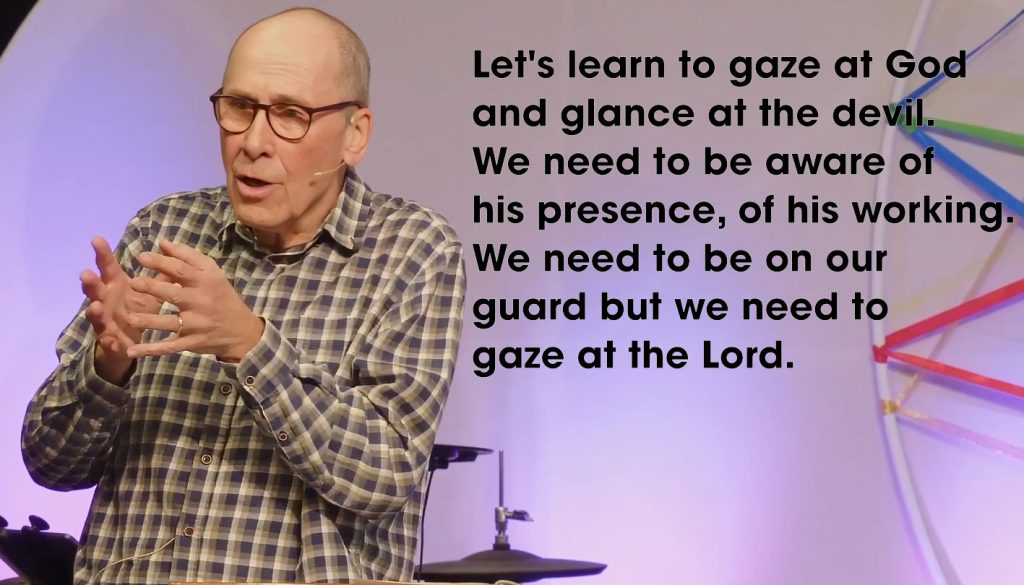
Gaze at God and glance at the devil. Yes, be aware of the enemy’s presence and tactics. But don’t become obsessed with him. Fix your eyes on Jesus, the author and perfecter of your faith.
Trust God’s word completely. The same lies that worked in Eden are still being whispered today: “Did God really say…?” Learn to recognize the voice of the enemy and counter it with truth.
The story of Genesis 3 isn’t just ancient history. It’s the story of every human heart that chooses independence over dependence, autonomy over trust, self-wisdom over God’s wisdom.
But unlike Adam and Eve, we have something they didn’t yet have: the promise fulfilled. The snake crusher has come. Jesus has defeated the enemy. And one day, He will return to permanently eradicate evil from His creation.
Until then, we live as people of hope in a broken world, trusting not in our own insight, but in the Lord with all our hearts.
0 Comments