
In our modern world of instant gratification and endless food options, the ancient spiritual practice of fasting seems almost counterintuitive. Yet, this powerful discipline has been a cornerstone of faith for millennia, offering believers a unique way to connect with God and strengthen their spiritual lives.
At its core, biblical fasting is the deliberate abstention from food for spiritual reasons. It’s not about dieting or health trends, but about creating space in our lives to focus intensely on our relationship with God. Throughout Scripture, we see numerous examples of individuals and communities fasting – from kings and prophets in the Old Testament to Jesus and the early church in the New Testament.
But why fast? In a culture that often equates feeling good with being good, the idea of voluntarily depriving ourselves can seem strange. However, the spiritual benefits of fasting are profound. Richard Foster, in his book “Celebration of Discipline,” emphasizes that “the major work of fasting biblically is in the realm of the spirit.” What happens spiritually when we fast is far more significant than any physical effects.
Interestingly, food plays a central role in humanity’s spiritual journey from the very beginning. In the Garden of Eden, Adam and Eve’s inability to refrain from eating the forbidden fruit led to the fall of mankind. Centuries later, we see Jesus facing a similar temptation in the wilderness. After fasting for 40 days, Jesus is tempted by Satan to turn stones into bread. Unlike Adam and Eve, Jesus resists, demonstrating the power of self-control and complete reliance on God.
This parallel between the Garden of Eden and Jesus’ temptation highlights a crucial aspect of fasting – it’s a way of reorienting our desires and dependencies. When we fast, we deliberately choose to rely on God rather than on food for our sustenance. It’s a tangible way of saying, “Man shall not live by bread alone, but by every word that comes from the mouth of God” (Matthew 4:4).
The early church understood the power of fasting. In the book of Acts, we see the apostles fasting as part of their worship and decision-making processes. Before sending out Paul and Barnabas on their missionary journey, the church in Antioch fasted and prayed. This wasn’t just a ritual – it was a way of seeking God’s guidance and empowerment for ministry.
One particularly poignant example of corporate fasting comes from the Old Testament. In 2 Chronicles 20, we read about King Jehoshaphat facing a vast enemy army. In response to this threat, he calls the entire nation to fast and pray. As they humble themselves before God, seeking His protection and guidance, God responds miraculously, causing the enemy armies to turn on each other. This story illustrates how fasting can be a powerful tool in spiritual warfare, allowing us to rely on God’s strength rather than our own.
But fasting isn’t just for times of crisis. It can be a regular spiritual discipline that helps us grow closer to God and become more like Christ. In Galatians 5, Paul talks about walking in the Spirit and not gratifying the desires of the flesh. Fasting can be a practical way of bringing our bodies into subjection, as Paul mentions in 1 Corinthians 9:27, helping us to align our physical appetites with our spiritual goals.
It’s important to note that fasting should never be about showing off our spirituality or trying to manipulate God. Jesus explicitly warns against making a show of our fasting in Matthew 6:16-18. Instead, it should be a private act of devotion, done with the right motives and attitude.
So how can we incorporate fasting into our spiritual lives? For those new to the practice, starting small is key. Consider skipping a meal and using that time to pray and read Scripture. As you become more comfortable, you might try a full day fast, going from dinner one evening to dinner the next day. Always remember to stay hydrated and be mindful of any health conditions that might make fasting unsafe.
Fasting can also be a powerful communal practice. Consider fasting with your small group or church community, perhaps as part of a focused time of prayer for specific needs or guidance. Many churches have found great spiritual breakthrough through corporate fasting.
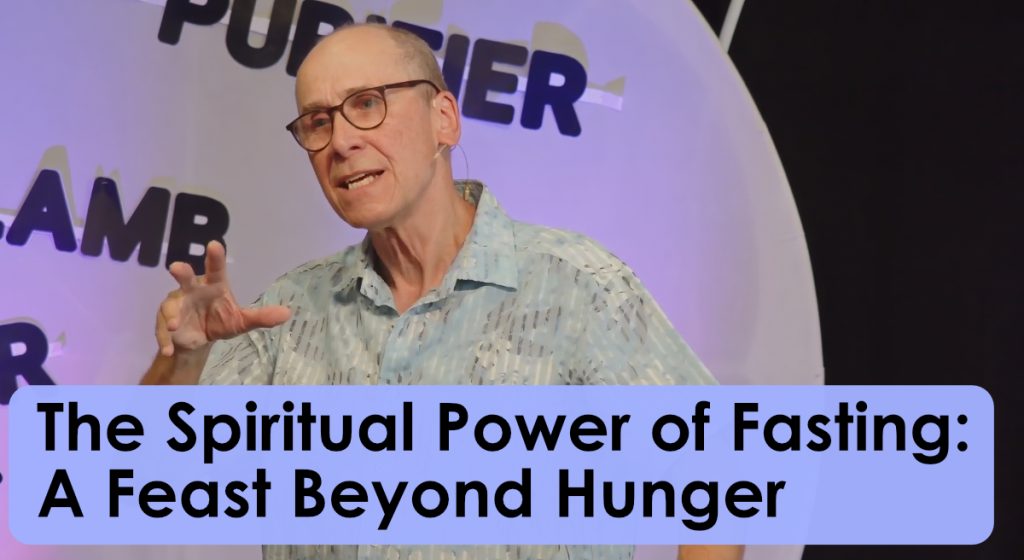
As we fast, we may find that our minds become clearer, our prayers more focused, and our sense of God’s presence more acute. It’s as if the absence of food creates space for a greater awareness of God. This is the “feast beyond hunger” – a spiritual satisfaction that goes beyond physical nourishment.
In our overfed and undernourished culture, fasting offers a countercultural way to prioritize our spiritual health. It reminds us that our deepest hunger is not for food, but for God Himself. As Jesus said, “I have food to eat that you know nothing about” (John 4:32). Through fasting, we can learn to feast on the presence of God, finding a satisfaction that no earthly food can provide.
As we consider incorporating fasting into our spiritual lives, let’s remember that it’s not about earning God’s favor or proving our devotion. Rather, it’s about creating space in our lives for God to work, aligning our desires with His, and learning to rely more fully on His strength and provision.
In a world that constantly tells us to indulge our every desire, fasting stands as a powerful reminder that true fulfillment comes not from satisfying our appetites, but from seeking God with our whole hearts. As we embrace this ancient practice, may we discover anew the feast beyond hunger – the rich satisfaction of intimacy with our Creator.
0 Comments