
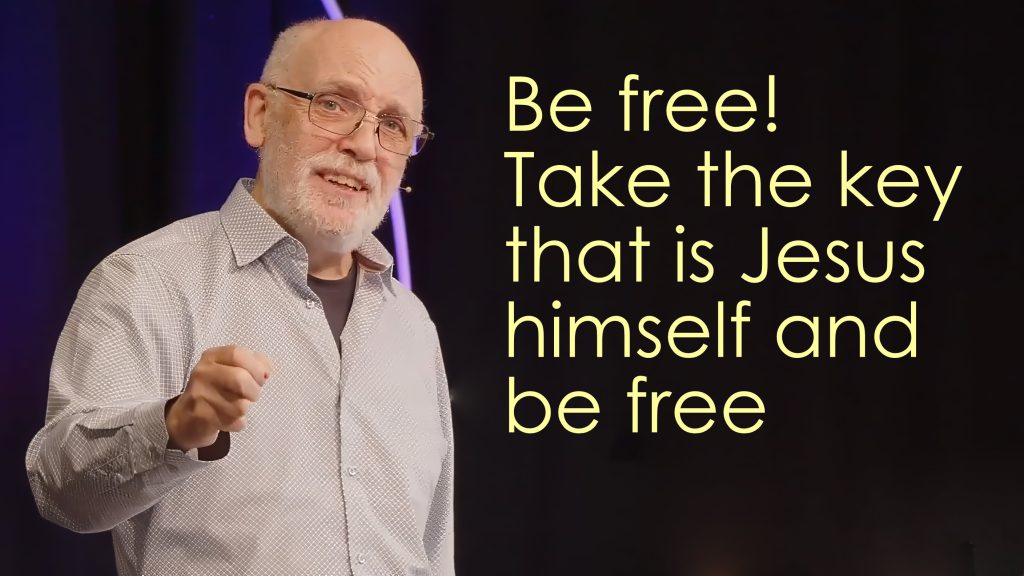
In the quiet solitude of a garden called Gethsemane, a pivotal moment in history unfolded. It was here, on the eve of his crucifixion, that Jesus Christ began to shoulder the immense weight of humanity’s burdens. This profound act of love set the stage for our freedom – a freedom that we are called to embrace fully.
The message is beautifully simple yet deeply profound: Be free. Take the key that is Jesus himself and unlock the chains that bind you. For it is in Christ’s willingness to bear our burdens that we can experience His blessings.
Consider for a moment the unnecessary weights we carry daily – worries, guilt, shame, sin, mistakes, and the terrors of the world. These burdens accumulate much like unwanted pounds, gradually weighing us down spiritually just as excess calories can affect us physically. Yet, in Gethsemane, Jesus began the process of lifting these weights from our shoulders, carrying them so we never have to again.
The apostle Paul reminds us, “It is for freedom that Christ has set us free.” This freedom is not a mere concept but a living reality, available to all who turn to Christ. Where the Spirit of the Lord is, there is freedom – freedom from the yoke of slavery to sin and worldly concerns.
As we delve into the events of that night in Gethsemane, we witness Jesus grappling with the enormity of what lay ahead. His soul was “overwhelmed with sorrow to the point of death,” a testament to the violent emotions shaking Him to His very core. The weight He was about to bear was incomprehensible – all the sin, sorrow, and judgment of the world concentrated on His shoulders.
Imagine, if you will, the collective horror of history’s darkest moments – the concentration camps, the killing fields, the pogroms – multiplied a million times over. This was the burden Christ willingly took upon Himself. As the composer Franz Schubert poignantly expressed in his song “Atlas”:
“I, unhappy Atlas, must bear a world, the whole world of sorrows. I bear the unbearable, and my heart would break within my body.”
This vivid imagery helps us grasp the magnitude of Christ’s sacrifice. He became the ultimate burden-bearer, not just for a select few, but for all of humanity.
In Gethsemane, we see Jesus confronting three distinct burdens:
- The Burden of Anticipation: Jesus knew what was coming. From childhood, through His knowledge of Scripture, to the Last Supper with His disciples, He was acutely aware of the path that lay before Him. Yet, He chose to see it through to the very end.
- The Burden of Isolation: In His hour of greatest need, Jesus found Himself alone. His disciples, overcome by exhaustion, could not keep watch with Him. More profoundly, He began to experience separation from His Father – a silence that foreshadowed the cry of dereliction on the cross: “My God, my God, why have you forsaken me?”
- The Burden of Submission: Faced with the terrifying prospect of bearing God’s wrath, Jesus pleaded for another way. Yet, in an act of supreme obedience, He submitted to the Father’s will: “Not my will, but yours be done.”
The intensity of Christ’s struggle is evident in the Gospel accounts. Luke tells us that Jesus’ anguish was so severe that His sweat became like drops of blood falling to the ground – a rare condition called hematidrosis, occurring only under extreme stress.
Why did Jesus endure such torment? The answer lies in His unfathomable love for us. He bore rejection so that we might know acceptance. He experienced abandonment so that we could be welcomed into the Father’s presence. He took on our judgment so that we could anticipate not condemnation, but the Father’s loving embrace.
In light of this extraordinary demonstration of love, how should we respond?
First, we must cultivate a renewed appreciation for the burden Christ carried on our behalf. Without His sacrifice, we would be utterly lost, facing a terrifying judgment. His love, expressed so powerfully in Gethsemane and on the cross, offers us hope and redemption.
Second, we are invited to take the key that is Jesus and open the door to freedom. Many of us have grown accustomed to carrying burdens – past hurts, present struggles, future anxieties. But Christ has taken every single one of these upon Himself. We don’t have to be dominated by our “dogs of depression” or chained to our fears. In Jesus, true freedom is available.
Third, we are called to carry each other’s burdens. As members of Christ’s body, we have a responsibility to support one another, especially in times of grief and struggle. The pain of loss never truly disappears, but through persistent love and care, we can help lighten each other’s loads.
Finally, we can learn from Jesus’ example of persistent prayer. Even when heaven seemed silent, He continued to pray fervently. Big victories often come through persistent and perspiring prayer, even when God seems distant.
As we reflect on the events in Gethsemane, let us be reminded of the immense love that drove Christ to bear our burdens. His sacrifice opens the door to a life of freedom – freedom from guilt, shame, and the weight of sin. It’s a freedom that empowers us to live fully for God and to extend His love to others.
Today, you have a choice. Will you continue to struggle under the weight of your burdens, or will you accept the freedom Christ offers? Will you take the key – Jesus Himself – and unlock the door to a life of purpose, peace, and unbounded joy?
Remember, it is for freedom that Christ has set us free. Embrace that freedom, live in that freedom, and share that freedom with a world desperately in need of hope. For in Christ’s burden-bearing love, we find the strength to face any challenge and the grace to experience true liberation.
0 Comments